Showing posts with label movies. Show all posts

Saturday, May 25, 2013

Time Flies When You're Traveling at Light Speed

"Return of the Jedi" was not the first Star Wars film I ever saw. But it is the first Star Wars film I remember seeing. I have a vague memory of my mother coming into my bedroom as a child to summon me for a screening of "The Empire Strikes Back," and according to my parents, I was terrified of the Jawas in "A New Hope" as an infant. But I have very clear memories of "Return of the Jedi." Memories that are now thirty years old.

Ugh...

The memory that keeps coming back over and over to my mind is standing in a ticket line that wound through the parking lot outside the Century Theater with my dad and Steve Jones, my best friend. In those pre-internet days there was little more than vague rumor to prepare me for what I was about to see, but thanks to a quick glance at a novelization my mother had picked up at the grocery store--complete with a half dozen glossy photos from the movie tucked halfway through its pages--I knew two things about the third chapter of the trilogy:
  1. The rebels were going to win.
  2. Princess Leia was going to wear an iron bikini.
What I didn't know was whether George Lucas and co. were going to stick with this silly idea of having Darth Vader be Luke Skywalker's father. As a six-year-old who was wise beyond his years, I was still unconvinced of Empire's famous plot twist.

"Why do you believe what he said?" I would ask anyone who would listen. "It's DARTH VADER. HE'S A LIAR."

Of course, 45 minutes into the film, Yoda confirmed the relationship, then Ben went him one further and told Luke that Leia was his sister. I was totally fine with this, because as a Han Solo guy*, I wanted him to get the girl in the iron bikini.

The thing I was too young to notice was the Ewok controversy. They were far from my favorite Star Wars characters, but I didn't have any problem with them helping to overthrow the Empire. I think I would have been more disappointed if I'd known Lucas was originally planning for the planet to be inhabited by Wookiees. Live and learn, eh George?

This was also before I grew in my appreciation for Boba Fett, so I wasn't crestfallen when I saw the most notorious bounty hunter in the universe Abbott and Costello his way into the gaping maw of a sunbathing Sarlaac. Strangely, the pattern of not questioning a film in the moment is something that has followed me through to adulthood, though my current employment is forcing a more critical hand.

Even though I attended the opening day screening with my dad, it was my mother who took me the majority of the 19 times I watched "Jedi" over the course of that summer**. I'm sure half of the time it was me nagging my parents to go, but there were just as many times that the motivation came from my parents' own interest. Another lasting image from that summer is my dad swinging our brand-new 1983 Honda Accord up to the sidewalk in front of the old Center Theater on the corner of State Street and Broadway in downtown Salt Lake. Before I knew what was happening, my mom was pulling me out of the car and hustling me through the red velvet ensconced lobby on our way to a spontaneous afternoon screening***. That's the kind of thing I'm talking about when I refer to my mother's influence on my appreciation for popular culture.

But the best family memory of Jedi has to be the time we dragged my one-year-old sister to a screening and wound up on the front row. She sat on my dad's lap and stared bug-eyed at the screen for two full hours.

Man, I really miss the Center Theater. It's an office building and a multiplex right now.

Years later, even though Empire has become my favorite of the three movies, Jedi maintains the closest ties to my childhood memories. One afternoon as a teenager I was riding shotgun with my Priest's Quorum Advisor on the way to a temple activity when I related the story of my dad and Steve and I at the Century.

"I'll never forget it," I said. "May 25th, 1983."

"Wow, that's impressive," my advisor said. "When were you baptized?"

I thought about it for a moment.

"Sometime when I was eight."

Happy Anniversary, "Return of the Jedi." Jacking up my spiritual priorities for more than three decades now.

---

*See my blog banner for evidence.

**Yes, I kept track.

***Inside the theater they'd hung a huge banner advertising a film called "The Big Chill." Though I didn't relate to the story of a half dozen ex-hippies reflecting on the aftermath of the '60s in the wake of a friend's suicide, the film's soundtrack pretty much laid the childhood foundation for my musical appreciation, including this song.

Sunday, May 19, 2013

A Spoiler-Filled Analysis of Star Trek's Inevitable New Debate

Whenever a director gets involved in an established franchise, whether it's Peter Jackson adapting beloved Tolkien novels, Joss Whedon bringing Marvel comics to life, or even George Lucas returning to a galaxy far, far away fifteen years after his original trilogy, a unique challenge is issued: do you focus on keeping the fans happy? Or do you risk the wrath of the fanboy and make a film that will appeal to a universal audience?

It isn't always an either-or proposition, and most filmmakers (especially those noted above) have tried to satisfy both sides of the equation. Over the last few years, JJ Abrams has been staring down one of the most daunting fanboy franchises of all, and with "Star Trek: Into Darkness," he brings that debate to the forefront.

In 2009's "Star Trek," Abrams laid down the gauntlet with a timeline twist that told Trekkies they should consider his films a unique interpretation of the Trek universe instead of a regimented set of prequels to the original series. By transporting a villain from Trek's canonical future into its ambiguous past, then allowing him to alter that past, Abrams shook off the fanboy tether and got to work telling his own story. One that had Spock hooking up with Uhura and the Planet Vulcan biting the big one long before Captain Kirk could ever climb the steps of Mount Seleyah.

But instead of declare total creative independence, Abrams' Trek films have continued to forge ties to their original source material, offering frequent echoes that suggest certain events in history are rooted, regardless of your particular timeline. (Longtime Abrams fan will note the previous exploration of this theme in "Lost"). This idea is played out to unexpected degrees in "Star Trek: Into Darkness," primarily through its familiar villain.

For months, speculation has swirled around the identity of actor Benedict Cumberbatch's baddie. As the second film of the new franchise, many expected/hoped for the second coming of Khan Noonien Singh, the legendary baddie Ricardo Montalban portrayed in the second film of the first franchise. Others noted parallels to Gary Mitchell, a Federation officer featured in the original TV series back in the late 1960s. It was telling that a completely unique character never seemed to be an option, and even more telling that Abrams chose to give fans a brand-new interpretation of that eugenics superman gone bad.

By choosing Khan as his heavy, Abrams has offered thrills to Trek's longtime fans, but stifled the immortality of his own franchise at the same time. "Into Darkness" is an awesome film that boosts the Star Trek resurgence, and Cumberbatch is an impressive Khan. To rookie Trek fans and casual observers, it's a great movie, and to seasoned veterans, it's even better. But the film's explicit nods to "Wrath of Khan" (right down to Zachary Quinto's echo of William Shatner's most infamous acting moment) that propel it to new heights of meaning also force it to take a backseat to the Montalban film.

Once Cumberbatch revealed his identity halfway through the new film, I couldn't help but fall into a "which is better?" internal debate between the two Khans and their respective films. In the face of superior special effects and imposing marketing, I almost felt defensive on behalf of Montalban and "Wrath of Khan," which I see as "my" film. I guess that is what happens when you write a 15-page paper on Chicano Nationalism through the lens of a 20-year-old sci-fi flick. Or when you retain childhood memories of turning away from the screen when those bugs get dropped in Chekov's ear.

It's amusing that I/we feel compelled to do this whenever confronted with options in popular culture, or anything else for that matter. If it isn't Benedict Cumberbatch vs. Ricardo Montalban, it's Coke vs. Pepsi, or (for my fellow photographers) Canon vs. Nikon. Heck, one of the implicit purposes of the new Trek franchise is to give it more street cred in the Star Trek vs. Star Wars debate. For decades Star Wars movies have been cultural events while Trek releases were attended by a narrow sliver of sci-fi fandom. While this may not mean anything in terms of film quality, profits are what allow our favorite franchises to keep turning out product. Abrams has sought to address that gap, and I think he has made great strides in generating a more inclusive fan base for Gene Roddenberry's baby. (Of course, now that Abrams is helming Star Wars as well, things are about to get very interesting.)

But as far as the Battle of the Khans is concerned, my verdict is this: Cumberbatch is awesome, more than up to the task, and will earn his spot on Star Trek's Mount Rushmore of All-Time Best Bad Guys. But since that particular Rushmore only features two faces, and since the other one is the original version of Cumberbatch's character, the New Khan can only go so far. "Star Trek: Into Darkness" is a film that can stand on its own feet and be enjoyed even if you aren't familiar with Trek history. But if you are familiar with Trek history, "Into Darkness" becomes even more impressive, but also more derivative and dependent as a consequence.

When Cumberbatch glares at Chris Pine with hollow eyes and declares, "MY NAME IS KHAN," it is a powerful moment only to those who already know who Khan is. When Zachary Quinto prods Leonard Nimoy into his Doc Brown Moment later on, the original Spock's reaction is weighted because we too remember what Khan did the first time around. Without the source material, these dramatic moments ring empty.

Of course, rational people will understand that this debate is as pointless as arguing whether LeBron James would beat Michael Jordan in a game of one-on-one. It gives you great fodder for sports talk radio, but it doesn't really mean anything. There's no reason you can't enjoy and appreciate both Khans. But when you enter the waters of such an established franchise, these kinds of debates come with the territory.

For years I've been trying to get my English students to understand the difference between text and context, especially how context can hold so much sway over a text's full meaning. "Star Trek: Into Darkness" may have just become Exhibit A in that lecture.

Friday, April 26, 2013

His Name is Mud

"Mud" offers a simple premise: two boys in rural Arkansas stumble onto a fugitive murder suspect hiding out in a swamp. But "Mud" is anything but a simple movie, and it has anything but a simple message. It is a brooding drama that is dark and funny and sweet at the same time, which is maybe just another way of saying it feels like real life.

It reminded me of Rob Reiner's 1986 coming-of-age tale "Stand By Me," partially because one of the boys (Neckbone, played by Jacob Lofland) is a buzz-headed hick who channels River Phoenix. The other (Ellis, played by Ty Sheridan) is the hopeless romantic I remember being at 14 and the tough-nosed punk I wish I had been at 14. Often the best characters remind you of who you are and who you wish you were.

The first plot point was a surprise. Maybe I've seen too many episodes of "24" or too many spy movies that use the old hostage cliche, but I assumed that the fugitive (named Mud and played by Matthew McConaughey) would feel threatened by the boys' discovery of his hideout and immediately threaten them with harm. Ellis and Neckbone seem to anticipate this during their first meeting. Instead, Mud recruits them to contact his girlfriend (Reese Witherspoon) and help with his escape plan, and the film becomes a study of the nature of trust, love, and role models.

The film is built of echoes:
  • The boys look up to Mud, who they see as a fount of world-weary seasoned wisdom. But later we meet Tom Blankenship (Sam Shepherd), the "old assassin" fount of genuine wisdom who makes Mud seem like a 14-year-old boy. 
  • Mud recruits Ellis to manage his communication (and thereby the relationship) with his girlfriend. In the meantime, Ellis' parents' marriage is coming apart. And in the meantime meantime, Ellis scores his own girlfriend and gets a nasty lesson in love of his own. 
On the one hand, Ellis looks to Mud and gets a tortured mix of hopeless romance undermined by self-sabotaging dishonesty. On the other, Ellis sees Gaylen, Neckbone's uncle (played by Michael Shannon), who spends most of his day in an ill-fitting wet suit, uses the Beach Boys' "Help Me, Rhonda" as both his "doin' it" song and his philosophy for life, and offers Ellis the most critical message of the film via a river garbage metaphor. His comic relief is the highlight of several strong supporting performances, and it saves "Mud" from sinking into the bayou under the weight of its own melancholy.

"Mud" is an interesting foil for "Beasts of the Southern Wild," another film set in the swamp that looks at its world with the wide-eyed wonder of child, and struggles to maintain its innocence when harsh reality gives its protagonist a swift kick in the Private Idahoes. It's the kind of movie that stifles your impulse to crack jokes about Matthew McConaughey going shirtless or Reese Witherspoon's (in?)conveniently timed arrest record. You want to point out that it feels a little long, but then you have to acknowledge that its deliberate pacing and mood is critical to its effect, and that you are probably just too used to movies that offer quick editing and a fast pace because they have nothing important to say. "Mud" isn't the kind of movie you watch with a group of friends on a Saturday night. It's the kind of movie you watch on your own in the middle of the week when you want a film to give you something to think about. It's beautiful and profound and well-worth a watch on the big screen, but you can see it on DVD and be just fine. In fact, the best endorsement I can offer is that two-thirds of the way through the movie I started to consider whether I would buy a copy of the film for my permanent collection.

"Mud" is rated PG-13 for consistent profanity, some vulgar dialogue, scattered violence, and the sight of Michael Shannon in a wet suit.


Friday, April 05, 2013

Remembering Roger

In about a year's time, I was able to shake hands with two of my most important creative influences. My encounters with Ray Bradbury and George Lucas in 2007 and 2008 only lasted a few seconds, but meeting them in person added a human element to relationships that would never have felt as genuine otherwise. You spend enough time reading a person's books or watching their movies, you start to feel like you know them. Bradbury and Lucas still wouldn't know me from Adam, but meeting them at least partially validated those relationships.

As of Thursday, I'm never going to have that opportunity with Roger Ebert. After a long bout with cancer that robbed him of his jaw and his ability to speak and eat for the last several years, Ebert finally passed away at the age of 70.

Of those three influences, Ebert is the only one I might be able to consider a colleague. He wrote film reviews for the Chicago Sun-Times for nearly 50 years, though like most people, I first got to know him as the the tubby Costello to Gene Siskel's Abbott on TV back in the '80s. Sometime between the year I spent as the film critic for my student newspaper in grad school and when I started writing reviews for the Deseret News in the fall of 2010, I discovered his website and have checked in with him regularly ever since.

Often I've clicked over to his site only seconds after submitting a review of my own, curious to know what he thought of a film, wondering if I had completely missed the boat. Which is funny, because I disagree with Ebert's reviews as often as I concur. The deeper truth is that whether I agree with him or not, I admire Roger Ebert primarily as a writer. Most film reviews (including many of my own, unfortunately) come across as formulaic and distant, cold analysis of inanimate celluloid. But Ebert put his heart into his reviews, composing efforts that felt more like personal essays. Instead of write about an obligatory checklist of things that make movies good or bad, he wrote about the experience he had watching a film, and in that sense, he could never be wrong.

In doing so, he tapped into the joy of watching great movies. And more famously, he tapped into the comic rage that can come from being victimized by an unholy pile of garbage. When we cover reviews and evaluations in my English courses, I often have my students read Ebert's review of "Transformers 2," and assure them that it's a lot easier to write a review of a movie you hate than of one you love.

Ebert also had a knack for modern media. Robbed of his speaking voice, and in spite of being in his '60s, Ebert was more than happy to jump headfirst into modern social media outlets like Twitter, and his exploits often landed him in the middle of mini-controversies. I disagree with him on matters of politics even more than I do on films, but I never felt like I had to abandon his writing for it.

Late in January of this year, I started making weekly appearances on the "KJZZ Movie Show" as part of an opening segment roundtable with host Melanie Nelson and Steve Salles, who writes for the Ogden Standard Examiner. It's a long way from "At the Movies" or "Sneak Previews," but it has been a great experience. One I'm sure I never could have had if it wasn't for Gene Siskel & Roger Ebert.

With that in mind, I think it would be fair to give him the last word. So here's a quote that perfectly describes the moviegoing experience, taken, appropriately enough, from his review of "Star Wars:"

"Every once in a while I have what I think of as an out-of-the-body experience at a movie. When the ESP people use a phrase like that, they're referring to the sensation of the mind actually leaving the body and spiriting itself off to China or Peoria or a galaxy far, far away. When I use the phrase, I simply mean that my imagination has forgotten it is actually present in a movie theater and thinks it's up there on the screen. In a curious sense, the events in the movie seem real, and I seem to be a part of them."

Saturday, February 02, 2013

"Warm Bodies" Keeps the Zombie Genre's Heart Beating...For Now

It's been six and a half years since a small group of my like-minded friends gathered in an unfinished basement in Woods Cross for the first official Zombie Fest. As much fun as the yearly tradition has been, over the years I've started to wonder how long it would be before our zombie passion would burn out. Every once in a while a fresh face like "Evil Dead II" would breathe some life into our routine of old standards like "28 Days Later" or "Night of the Living Dead," but in spite of our efforts, the Zombie Fest Apocalypse may still be at hand.

2012's event felt like the last bullet to the undead-brain: after the first feature, a screening of the so-so "Quarantine," most of the fest attendees decided to call it a night. Only my friend and fellow head-shaver Spencer and I stuck around to watch "Dead Snow," a Norwegian film about a group of skiers who encounter a raging band of Nazi Zombies on the frozen tundra.

"Dead Snow" was either the greatest camp zombie movie I have ever seen, or a desperate effort to squeeze original blood from the zombie stone. It had all the craziness and creativeness that make zombie movies fun (plus a POV shot that might cure you of zombie flicks on its own), but while watching it, I couldn't help but think to myself, "where do we go from here?"

Now I know: zombie romantic comedies. This weekend I took a spin over to the Centerville Megaplex with some friends to see "Warm Bodies," which boasts one of the most unique zombie breakthroughs since Danny Boyle asked, "what if zombies could run fast?" For the first time, we see the film from the zombie's point of view.

Specifically, we see it through "R's" point of view. Played by Nicholas Hoult (the kid from "About a Boy," if you can believe it), R spends his days wandering around an abandoned airport, scavenging for brains and having periodic grunt conversations with his only friend (played by Rob Corddry). It's been about eight years since the outbreak, but he can't remember what caused it, being undead and all.

R is a special kind of zombie. He's dead, but there's still a personality flickering around in his own brain, enough to give us some voice-over narration throughout the film. He's more or less staked out an abandoned passenger jet as his new home, filled with odds and ends he's picked up in his slow, lethargic travels. He's even got a working record player and an impressive vinyl collection. Rrr is basically an EMO zombie hipster.

One day, on a search for brains with some of his undead friends, Rrr stumbles onto a band of humans in search of medical supplies, led by Julie (Teresa Palmer) and her PTSD-suffering boyfriend Perry. The angelic vision of Julie brandishing a shotgun while her blond locks flow in slow-motion triggers something in R, so after beating her boyfriend to death and eating his brains, he whisks her off to the safety of his passenger jet, and the romance begins.

Now, I don't mean to discard the whole "beating and brain eating" thing too casually. One of the more interesting aspects of "Warm Bodies" is how it tries to negotiate its lighthearted zombie-in-love premise with its more macabre realities. "Shaun of the Dead" was able to keep its entire satiric narrative on an even tone, but "Warm Bodies" tries to offer a philosophical metaphor to the idea of eating a person's brains. I guess you have to do that when you're trying to make a sympathetic protagonist out of a corpse that sustains himself on the living, but it's a stretch, if nothing else.

Still, when you get right down to it, "Warm Bodies" is more a metaphor for the awkwardness of love than it is a zombie movie, and that's what makes it so relatable, and so fun. I doubt there is a guy out there who hasn't felt like a staggering, creepy, tongue-tied oaf when trying to have a conversation with a girl he was attracted to. And I'm guessing the film is pretty relatable from the female side of the equation as well. Though I can't say for sure, being undead and all.

The film has its faults, but if you have felt a little burned out by the zombie genre and were debating whether to say goodbye (or if you just need something to tide you over until "Walking Dead" starts up again), this one would be worth checking out before you go.

Saturday, January 26, 2013

Memories of My First Sundance

Some quick fun facts about me:
  1. I have never paid money for bottled water.
  2. Despite living minutes away from some of the most popular ski resorts in the country, I have been skiing exactly once.
  3. Despite living minutes away from the site of one of the five biggest film festivals in the world, I had never been to a Sundance screening until earlier this week.
My reasoning for never having attended a Sundance screening is a topic worthy of its own post, so for now I'll just share some of my random thoughts and memories from spending my Martin Luther King Holiday covering a film festival in Park City:


  • 8:30am: Crouching at the back of my Honda Accord in sub-zero weather at Slim Olson's in Bountiful, trying to decide whether the air hose attached to my back tire was inflating it or deflating it, wondering whether I really wanted to drive up to Park City and spend the next 15+ hours covering the reputed mayhem that is the Sundance Film Festival.
  • 9:15am: Driving blindly through the parking lot at the Park City Marriott as sunlight glares through my windshield, lucking into a free parking space on the street right outside, then strolling into Festival Headquarters and picking up my media pass at the press credential desk, where I once again got that strange feeling that someone was giving my opinions credibility.
  • 9:25am: Walking through the lobby and making eye contact with a cute girl with green eyes, then stopping outside and debating whether I should go back in and try to talk to her, even though she was wearing snow pants and was obviously about to head out on the slopes and wouldn't be interested in going to a screening of a random movie based on a Jack Kerouac book, though you never know until you try, and she did have a lanyard on, so she could be press herself, and so I went back inside the lobby, where instead I was approached by a random red-haired woman who thought she had met me at a party the night before.
  • 9:45am: Kicking myself for not getting out the door fifteen minutes earlier so I could both get my press credential early and still have time to catch a warm-up screening before "Big Sur" instead of lingering around the Yarrow Hotel lobby killing time reading over each Sundance entry synopsis seventeen times in the press guide.
  • 11:30am: Filing into my first screening of the day at the Yarrow Theater, finding a seat, then being approached by a guy named Jack who also thought he had met me somewhere before. (He actually looked up a picture of the person he was thinking of on his phone and showed it to me so I wouldn't think he was crazy.)
  • 12:30pm: Watching actor Jean-Marc Barr (playing Jack Kerouac in "Big Sur") chain-smoke his way through virtually every second he spent in the incredible natural wonder that is Big Sur National Park, then remembering my own brief experience in Big Sur: trying to sleep on a picnic table in one of the park's campgrounds halfway through my road trip up the Pacific Coastal Highway in the summer of 2009.
  • 1:15pm: Wondering if the copy of Entertainment Weekly that I had impulsively grabbed from a stack in the press tent was complimentary or if I was supposed to have paid for it, then sheepishly double-checking with the amused festival volunteer on my way out of the theater. 
  • 1:30pm: Intentionally sitting in the sun at my booth at Taco Maker because it was so much nicer than the crappy cold and inversion I'd been dealing with in Salt Lake, noting that Taco Maker chooses to call its Tator Tots "Potato Gems" instead of Tator Tots (or Mexi Fries like Taco Time), then debating whether I should feel dumb for eating at Taco Maker during my one day in Park City.
  • 2:15pm: Being herded into the press tent outside the Holiday Theaters, feeling a little like I was about to become some kind of human entry in a State Fair-style livestock display, then talking to Duncan, a lawyer from LA who has been attending Sundance for two decades and looks a little like a younger Robert Redford (though I'm sure every red-haired guy looks a little like Redford during Sundance) while waiting in line for the press screening of "Manhunt," a documentary about the search for Osama bin Laden.
  • 3:30pm: Nodding off in the mid-afternoon screening of "Manhunt," then hearing the gasp in the audience when someone indicated that Khalid Sheikh Mohammed was waterboarded 183 times in one month, even though another someone indicated that 183 was the number of dunks, not the number of actual sessions, whatever that means. 
  • 4:45pm: Weighing whether to try to squeeze in an extra screening--in this case, "Blackfish," a documentary about a killer whale in captivity that has either killed some of its handlers or killed some of the people watching it perform, I can't recall--even though the film was already spoken for by one of my D-News colleagues, then deciding to use the break to take a crowded bus downtown then stroll up and down Historic Main Street and take some pictures of "the Sundance scene."
  • 6:30pm: Taking a few shots of a couple of girls who had been stopped by a crew from the Sundance Channel for an interview while a car drove by and a passenger called out the window, "CELEBRITEEEEES! CELEBRITEEEES!"
  • 7:00pm: Sitting by myself at a four-person booth in The Bandit Grill, eating what was listed as a half-pound hickory burger but only seemed to be 1/4-1/3 pounds of angus beef, wondering if the guy at the table next to me is really the supporting character actor I think he is, or if I am just assuming that everyone in Park City is famous, and secretly regretting the fact that I didn't do any research to figure out the best places to eat in town before I drove up.
  • 9:15pm: Standing in the press tent waiting for the 10pm "Sound City" screening, weighing the prospects of driving home through Parley's Canyon at 12:30am,  and wondering if I should just bail and tell my editor that I would write a review of "Manhunt" instead, since I really don't know if Deseret News readers are all that psyched to learn about the studio in LA where Nirvana's "Nevermind" and Fleetwood Mac's "Rumors" were recorded, even though I kind of am.
  • 9:55pm: Deciding to stick it out with "Sound City," then changing seats multiple times before the movie began when the middle-aged woman in the white fur coat on the row behind me starts coughing like crazy and sniffing like she was inhaling either cocaine or boogers or both and either way I didn't want to get sick for the third time in a month or take the chance of her husband/partner/parole officer kicking my chair for the fourth time while I was just trying to enjoy a documentary about a nice little recording studio in Los Angeles.
  • 10:10pm: Watching the album montage at the beginning of "Sound City" and thinking that pretty much every album released between 1974 and 1994 was recorded there, then laughing when interview segments with rock gods like Neil Young and Tom Petty and Mick Fleetwood were suddenly followed by an interview segment with Barry Manilow.
  • 10:45pm: Noting that director Dave Grohl just spent fifteen minutes on the technical details of the Sound City mixing board, and thinking that only diehard music fans will embrace the "Sound City" documentary in its entirety, but that the fans would have to be OK with R-rated language, because after keeping a mental tab on the number of F-bombs in "Sound City" so I could determine what rating estimate to use in my review, I had to give up after about two dozen.
  • 12:15am: Driving home through Parley's Canyon after 15 hours in Park City, safely and happily, glad I stuck around for "Sound City," but also glad that my long first ever day at Sundance was over.

Thursday, January 03, 2013

The 10 Most Embarrassing Movies in My DVD Collection


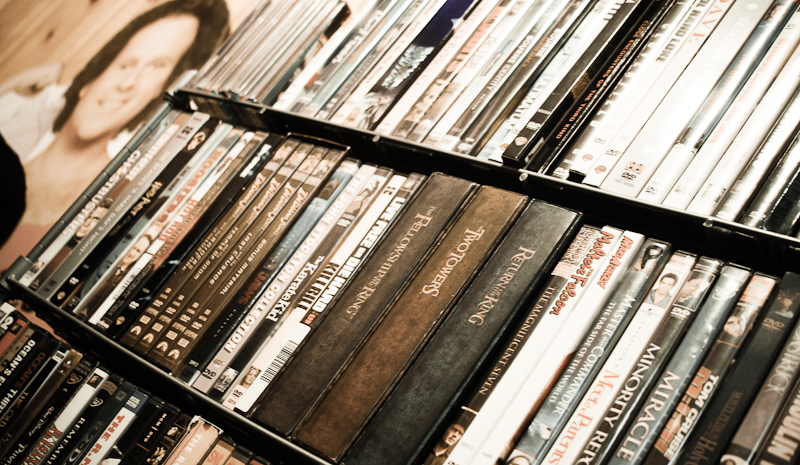
In a world pushing to consolidate our belongings onto digital devices as small as humanly possible, I'm still kind of old fashioned when it comes to my media library. When I go to a friend's house, I still like to see a row of books to browse, or a line of CDs to judge maliciously. But such judgments have to be at least a bit reserved, because as I look at the rows of DVDs next to my TV, I realize that in my heart I am as human and flawed as the next guy.

Here are the 10 most embarrassing movies in my DVD collection, presented in the order I felt like writing about them, along with my token attempt to justify their purchases:

1. Arthur 2: On the Rocks

"Arthur" is a classic early-80s comedy about a spoiled rich-boy drunkard that was made before it occurred to anyone that making alcoholism funny might not be the best idea. "Arthur 2" is one of those movies that is only watchable at about 2AM on cable when you absolutely refuse to go to bed. It also happened to come in a "Comedy Double Feature" DVD set I picked up for $10 a while back in order to get the original. Verdict: Sort of justified.

2. Romeo + Juliet

You wouldn't think a guy who had taught English classes for 10 years would be embarrassed to have a copy of "Romeo + Juliet" on his movie shelf, even if it is the Baz Luhrmann version. But as a red-blooded American male, I do wonder what kind of impression it will make. I got it from my sister when we divided up her Baz Luhrmann boxed set. She kept "Strictly Ballroom" and the special features DVD, and I got "Romeo + Juliet" and "Moulin Rouge." Verdict: Kind of, sort of justified.

3. Mars Attacks

There's no reason to be apologetic about being a Tim Burton fan. I even kind of enjoyed "Dark Shadows." Still, even longtime Burton fans would probably admit that "Mars Attacks" wasn't his best effort. But there I was in Logan one cold night in grad school, determined to expand my DVD collection, and "Mars Attacks" was only $9. I don't know; maybe I should have kept browsing. Verdict: Not justified.

4. Dune

Prime example of why sometimes seeing the movie before the book ain't always a bad idea. Most fans of Frank Herbert's sci-fi novel despise what David Lynch did to the source material. But I just remembered a cheesy Toto soundtrack, a laughable blue space-speedo for Sting, and lots of outer space surfer-dudes riding on the backs of giant sand worms. So I bought it. On blu-ray. About five months ago. Verdict: Probably not justified, but I really don't care.

5. Serendipity

Just about the time I hit puberty, "Innerspace" left me with a deep appreciation of the music of Sam Cooke and an even deeper crush on Meg Ryan. Ten-odd years later, "Serendipity" left me with a deep appreciation of the music of Nick Drake and a crush on Kate Beckinsale. It helped that the male lead was John Cusack, who my subconscious has seen as a big brother figure ever since his supporting role in "Stand By Me." Add it all up and tack on some dating drama of my own from that stretch, and "Serendipity" landed on my shelf permanently. Verdict: Justified. No really, justified!

6. Elizabethtown

"Elizabethtown" is widely viewed as one of Cameron Crowe's lesser films, and it offers Kirsten Dunst haters plenty of ammunition. But in spite of the romantic comedy elements, "Elizabethtown" is more a story of a young man learning about where he came from, and about the father he wishes he'd known better. And it finishes off with a fantastic road trip sequence, scored by some great Crowe selections. "My Father's Gun" may not do for "Elizabethtown" quite what "Tiny Dancer" did for "Almost Famous," but it did enough to get it on my shelf. Verdict: I don't care what you think. Justified!

7. Star Wars Episode 1: The Phantom Menace

It's true that I own the entire Star Wars prequel trilogy (two times over, if you count my new blu-ray set). It's also true that I recently wrote an article for the Deseret News explaining why I felt the prequels fell far short of the originals. As much as the critic in me would like to tell you that the first time I saw "Phantom Menace" I was terribly insulted and never returned, the truth is I probably saw that movie in all its Jar-Jar-infested glory about a dozen times in the summer of 1999. If it helps, I can't actually remember watching the DVD since I bought it. Verdict: I am a sad, conflicted human being.

8. Spider-Man 3

I think I was more exciting about getting a new release DVD for five bucks than I was excited about getting a copy of "Spider-Man 3." Honestly, I liked the first two better, and I don't own either of them. But in its defense, SM3 wasn't quite as bad as some would have you believe. I actually enjoyed the James Brown sequence.

(OK...fine. I just re-watched the clip. That was pretty bad.) Verdict: Not justified.

9. Pirates of the Caribbean 3: At World's End

Another example of me owning a sequel but not an original. I liked the first Pirates movie, had no desire to see the second (I think I caught it on cable), and was only interested in seeing the third because I heard that Keith Richards would make a cameo as Jack Sparrow's dad. So when my buddy Bob offered me his copy because he couldn't see his kids having any interest in the film, I accepted his gracious gift. And haven't watched it since. Verdict: Kind of, sort of justified.

10. Pearl Harbor

If you're only going to own one Michael Bay film...this probably isn't the best choice. From the ridiculous love story tacked loosely onto an American tragedy to the sweeping adult-contemporary flagship single from Faith Hill, "Pearl Harbor" was one of the most obvious attempts to cash in on the "Titanic" formula. When I picked it up used I told myself it was just for the action scenes, and when backed into a corner I would hide behind the Beckinsale crush again. But I have to be honest here: I paid money for a bad movie. It wasn't the first time, and it probably won't be the last. Verdict: Not justified, running in slow motion away from an explosion at a low angle.

Monday, September 12, 2011

The Birthday List, Item #5: Read the Constitution

When I was in the sixth grade, we celebrated the 200th Anniversary of the drafting of the US Constitution by memorizing the classic "We are the People" preamble. In the fall of 1994, I took American National Government at the University of Utah, and enjoyed the course so much I briefly* considered the option of being a Political Science major. Five years ago, on my first (and so far only) trip to Washington DC, I dropped by the National Archives to see the original manuscripts of the Constitution, as well as the Declaration of Independence.

On the way out, I bought a snow globe commemorating the day Elvis met Nixon.

Somehow, in all that time, I never actually sat down and read the Constitution. Not very patriotic of me. But this birthday list thing seemed like an ideal opportunity to remedy that problem, so one afternoon in late July, I googled "US Constitution" and wound up on the government-run "Charters of Freedom" website, where I read the Constitution transcript in full.

What I came away with was surprising. Surprising in that I was pretty familiar with most everything I read. No big shocks, no, "wait a minute, there's a LAW against that?" moments. I may not be the most studied student of US History, but I was already familiar with the setup of the three branches of government, so what I was most surprised by was how simple the Constitution is.

And maybe that's what is so great about it.

It also occurred to me that the Constitution is probably a lot like a groundbreaking movie (if you'll excuse the tacky pop culture allusion). For example, it's widely accepted that the first real movie car chase took place in the 1968 Steve McQueen film "Bullitt," as McQueen chases some bad guys through the streets of San Francisco in a green Mustang GT. It's a pretty cool scene, but 40 years of car chases in the time since have kind of upped the ante a bit, so anyone raised on, say, the car chases from the Bourne movies are going to look and "Bullitt" and go, "hey, that's lame." (They might also go, "hey, why does Steve McQueen keep driving past that same Volkswagen Bug over and over?", but that's off topic.)

What I'm trying to say is that I think the Constitution is one of those things that's easier to appreciate if you put it in the context of its time. Growing up as a lifetime beneficiary of the document's principles make it a lot harder to comprehend what life was like before it was around, or what life would be if I had grown up without it. Like so many of life's great blessings, it's easy to take it for granted.

*Briefly = About 30 seconds

Friday, December 17, 2010

New Tron Review Online

My new review for "Tron: Legacy" is online at the Deseret News website:

"Tron: Legacy is a Stylish Update"

According to Rotten Tomatoes, I seem to be in the minority among critics. But Roger Ebert agrees with me, at least.

Monday, November 22, 2010

Bruce and Me

OK, so it's official: I look like Bruce Willis.  I've always wanted to think I looked like Bruce Willis (at least since I started shaving my head), but I never felt justified in making the claim on my own.  I needed external confirmation.  You can't pick your own nickname, and you can't pick your own celebrity doppelganger.  These are the very pillars of civilized society.

So who offered me this external confirmation of which I speak?  1990's country star Collin Raye, that's who.  Last week after one of his recent concerts at the Desert Star Playhouse in Murray, I was hanging out with Mr. Raye backstage* discussing the extended piano/guitar solo at the end of the early 1970's Derek and the Dominos hit "Layla" when he interjected the following:

"Has anyone ever told you you look just like Bruce Willis?"

Doppelganger confirmed.

That was Wednesday night. On Saturday, I was out in North Salt Lake at a clubhouse party when my buddy Tyler and I chose to approach a girl who looked a lot like Meg Ryan. That resemblance, in fact, was our method of breaking the ice with her.  Then Tyler continued the game:

"So what famous person does my friend here look like?" (indicating me)

"Bruce Willis," she said, without skipping a beat.

So there you go.  Two unrelated confirmations that I look like one of the baddest action heroes to ever grace the silver screen (or the small screen, I might add; I've been a big fan of Bruce ever since his "Moonlighting" days). Truth be told, my sister has maintained my resemblance to Mr. Willis for several years now, but I always dismissed it because she is legally and genetically obligated to make me feel good about myself.

But Collin Raye and Meg Ryan aren't.

Yippie Ki-Yay.

---

*A future post will clarify the circumstances of this exchange, but for now I will just sit back and let it fester in your totally-blown minds.

Monday, November 08, 2010

Movies for Music Fans

Anyone who has read more than a half dozen posts on this blog, sat through a semester of one of my English classes, or talked to me at a party for more than ten minutes knows that music and movies are two things that are near and dear to my heart (almost as dear as hard shell tacos). And while there are plenty of movies out there with great soundtracks, the ones that really get through to me are the ones that are about those soundtracks.

Here is a list of seven great movies for people who love music:

A Hard Day's Night (1964)

The plot: Pretty simple, really. At the height of Beatlemania, John, Paul, George and Ringo arrive in town for a day's worth of press conferences, TV tapings, and a live concert, dodging rabid fans, sophisticated press agents and local police along the way.

The music: Some of the best of the early Beatle catalog, including "Can't Buy Me Love," "If I Fell," and "All My Loving," among others.

The moment: Early in the film, while the Fab Four are hanging out in the dining car of the train they are using to make their next gig, Paul wanders over to flirt with a couple of school girls. It would just be another charming throwaway moment if one of the school girls wasn't Patty Boyd, future wife of both George Harrison and Eric Clapton, and the woman who inspired the song's "Something" and "Layla."  That must have been some cameo.


Almost Famous (2000)

The plot: I've always thought of this movie as the film equivalent of "The Wonder Years," if Kevin Arnold was an aspiring music journalist who wound up on tour with a 2nd tier rock band in the early 1970's. Instead of chasing Winnie Cooper, this Kevin (William Miller, played by local SLC product Patrick Fugit) winds up falling for a semi-mythic groupie named Penny Lane (Kate Hudson.)

The music: The movie is a semi-autobiographical account of how director Cameron Crowe got his start at Rolling Stone, so the film is jammed with music from pretty much every act from the early '70's: Bowie, Zeppelin, Hendrix, and an unforgettable sequence with Elton John's "Tiny Dancer."

The moment: William Miller may be on tour with a real rock band, but he's still an outsider. When things go bad late in the film and William has no one else to turn to, he calls up his mentor, Creem Magazine editor Lester Bangs (played by Philip Seymour Hoffmann), and the resulting conversation says it all.


The Blues Brothers (1980)

The plot: Two black-suited ex-cons reform their old R&B band when God inspires them to raise the money to save the Chicago orphanage they were raised in from imminent foreclosure. Along they way they battle local police, neo-nazis, Indiana rednecks, and Carrie Fisher.

The music: The music in this film is the template for a working knowledge of soul music. Not only do James Brown, Aretha Franklin and John Lee Hooker play on the soundtrack, they also show up in cameos throughout the film. This movie is ground zero for my music appreciation.

The moment: After looming in the background like the angel of death for two hours, Carrie Fisher finally tracks down our heroes in a dank sewer. When he finally takes off his sunglasses for the first and only time in the film, you know why John Belushi was one of the greatest comedians to ever hit the screen.


The Commitments (1991)

The plot: A rogue group of working class Irish misfits from Dublin band together to save soul music and figure out what on earth those lyrics to "Whiter Shade of Pale" really mean. The perfect movie for any white suburban kid who was raised on Motown and James Brown.

The music: Do-it-yourself covers of soul standards from Aretha Franklin to Wilson Pickett.

The moment: The drummer wants to kill the lead singer. The sax player thinks he's a jazz soloist. The trumpet player has turned all three backup singers against each other. The manager has a price on his head from the loan shark he used to score the band's equipment. And outside, Wilson Pickett may or may not be on his way to jam after he finished a gig of his own.  In the middle of everything, the band gathers on stage for one last rally before the lights go out, delivering a cover of Otis Redding's "Try a Little Tenderness" that explains just what soul music is all about.


High Fidelity (1998)

The plot: John Cusack's Robb is a thirtysomething record store owner who is going nowhere. When his longtime girlfriend leaves him (for a New Age Tim Robbins), Robb revisits the girls of his past in order to make sense of his future, wondering if he is miserable because he listens to pop music or if he listens to pop music because he is miserable. Based on Nick Hornby's novel of the same name.

The music: "High Fidelity" is set in the 90's, but it's about a record collector, so the soundtrack covers ground as diverse as The Velvet Underground, Marvin Gaye, and the Stiff Little Fingers.

The moment: When Robb finally concedes to attend the local debut of his manic employee Barry (Jack Black)'s new band, he expects the worst of garage rock. What he gets is something entirely different.


Pirate Radio (2009)

The plot: At the peak of the British Invasion, the only way Britons could listen to rock and roll on the radio was to dial in to a pirate broadcast from a ship anchored somewhere off the mainland. "Pirate Radio" is a fictionalized account of one of those ships, told through the eyes of a prep school dropout who is sent to the ship to meet his long unidentified father.

The music: Set in 1966, the movie features the best of The Who, The Stones, The Kinks, and tons of other British Invasion greats.

The moment: When one of the DJ's steals the girl of his dreams, Carl (the dropout) finds himself in familiar rough waters. When two members of the crew try to cheer him up, you realize that the movie is about a lot more than music.


That Thing You Do (1996)

The plot: The prototype tale of a one-hit wonder set in the excitement of the early 1960's. When amateur drummer Guy Patterson (Tom Everett Scott) joins a local band called, yes, "The Wonders," their catchy hit takes them from small-town Pennsylvania to the top of the national charts, then leaves them alone at the peak with no way down.

The music: Unlike most of the other movies on this list, the music in "That Thing You Do" is all original, penned to mimic early 1960's styles, and it is remarkably effective in doing so.

The moment: When the band inevitably splits, leaving Guy at the recording studio with no one to play with, he runs into his Jazz, drummer Del Paxton, who passes on some advice that has pretty much defined my amateur musical career.


Honorable Mention: American Graffiti (1973)

The plot: Before George Lucas made "Star Wars," he directed this relatively low-budget film that follows the hijinks of a group of friends on the last night of summer in 1962. Even though it's not about a specific musical topic, the period soundtrack is omnipresent throughout the film, mostly channeled through the radio broadcast of famous DJ "Wolfman" Jack that the characters always seem to have playing on their radios.

The music: Set in 1962, "American Graffiti's" soundtrack covers the best of early rock and roll, right up to the days before the Beatles hit. Del Shannon, Bill Haley, Buddy Holly...they're all here.

The moment: In one of the most contemplative scenes in the movie, Richard Dreyfuss' character Curt actually drops in on The Wolfman because he wants to drop off a dedication to the elusive blond he's been chasing for the whole movie. Growing up, my favorite scene was Curt's initiation into the local Pharoah gang, but as I get older this encounter with The Wolfman takes the number one spot.

Monday, October 18, 2010

Why I Love Movies

I'm not sure where I got the idea (or the motivation) to do this, but over the last couple of weeks I've been putting together a highlight reel of some of my favorite movie clips. Like I said, I'm not sure why I did it, but I do know that it's been a lot of fun to see so many of my favorite moments in close succession. I'm sure you'll recognize a lot of these clips, but if any seem unfamiliar, let me know and I'll tell you where to find them. Even if you don't recognize them, I'm sure that half a dozen of these will make you smile, if not more.

Just so you know, there is a touch of PG/PG-13 level language in a few of the clips.

Thursday, September 30, 2010

Carrie Fisher is the Center of the Universe

Last week I dropped by the Davis County Library to check out some new reading material, and picked up a copy of Carrie Fisher's recent memoir, "Wishful Drinking." It was a pretty eye-opening account of a woman born to a pair of 1950's Hollywood celebrities who went on to deal with substance abuse, manic depression, and the eternal burden of an iron bikini.

I finished the book by the end of the day. The next day, her celebrity father died.

I don't think there was a connection.

What was even stranger, though, was realizing just how central a role Carrie Fisher has played in my pop culture universe:

1. Carrie Fisher played Princess Leia in "Star Wars."

The first "Star Wars" film came out six months after I was born, and I spent the first ten years of my life wanting to be Han Solo when I grew up.  While I never quite developed the same crush on Princess Leia as some of my fellow peer-nerds, that infamous gold bikini from "Return of the Jedi" might explain why I never went through that early childhood phase where boys think girls have cooties.  Not that it helped any.

2. Carrie Fisher played John Belushi's estranged ex-fiancee in "The Blues Brothers."

If "Star Wars" is the keystone of my appreciation of science fiction, "The Blues Brothers" is the keystone of my appreciation for comedy. When I was a kid, "The Blues Brothers" was that cool movie on cable where they have a car chase in a mall. In high school, it became the foundation for my deep appreciation for soul and blues music. By the time I left on an LDS mission to Chicago, the film had a flat-out divine import. A mission from God, indeed.

3. Carrie Fisher was married to Paul Simon.

Before "The Blues Brothers" solidified my R&B roots, my parents raised me on a steady diet of Motown and Simon & Garfunkel. To this day, "Mrs. Robinson" instantly links me to memories of our family Honda weaving through Douglas Fir trees in Yellowstone National Park, even though the song itself was written in Greenwich Village, New York. I still maintain that Paul Simon is the greatest songwriter of the late 20th Century (even though he truly needed Garfunkel to bring his best stuff to fruition). Carrie Fisher would probably agree with me.

Moreover, Ms. Fisher is an accomplished writer (four other novels to date) and stage performer (the memoir was adapted from a live comic performance she used to do...or may still do.  I don't know, the book came out two years ago.)  With all those different interests, Carrie Fisher, like Steve Martin and Woody Allen, is nothing more than a considerably more successful version of me.

(uncomfortable silence...)

Yep, that pretty much says it.

Wednesday, September 29, 2010

Further On Up the Road: 2010 Epic Summer Film

For anyone who wasn't able to make it out to Sugarhouse Park last weekend, here is my submission for the 2010 Epic Summer Film Festival, "Further On Up the Road:"


Unlike my previous Epic Summer submissions, I didn't go for the mockumentary this time. This piece is more an attempt to tie together the different interests I was pursuing over the summer, and pull out some kind of common theme. Near as I can tell, the common theme was Rock and Roll. From the band I played in to the bands I photographed to the road trips I took, music seemed to play a dominant role in the experience, much more so than humor, anyway.

A number of people thought I should have identified all the locations in the photos and video clips in the film. Since I didn't, I'll list some of them below:

  • Arches National Park
  • Canyonlands National Park
  • Seattle, Washington
  • The Jimi Hendrix Memorial, Washington
  • Sturgis, South Dakota
  • Devils Tower National Monument, Wyoming
  • Mount Rushmore National Monument, South Dakota
  • Cody, Wyoming
  • Quake Lake, Montana
  • Antelope Island, Utah
  • The Layton City Amphitheater
  • The Bountiful Days of '47 Parade
  • Yellowstone National Park

If anyone has a specific question about any of the images or clips, feel free to leave a comment.

Friday, September 17, 2010

Epic Summer: Deleted Sequence

Tomorrow night I will be participating in my fourth Epic Summer Film Festival up in Sugarhouse Park.  It's an annual event where a bunch of laid-back folks hang out and watch amateur films about outdoor adventure and humanitarian efforts.  Very cool vibe.  A buddy of mine turned me on to the event four years ago after we hiked The Subway together, and I've been a participant in the festival ever since.

This year's submission, "Further On Up the Road," is probably the most "epic" of my films so far, in this case attempting to capture the events of an entire season instead of a single hike or road trip.  Even so, at the end of the editing day, some pieces don't quite fit into the final product.  One of my favorite things about the summer season is making fresh salsa, and I put the following sequence together in the hopes of working it into the film.

As much as I love fresh salsa, I couldn't find a good way to work this footage into the final film logically.  But I don't want it to go to waste, and I'm kind of bummed about summer being over, so here you go.  If you love fresh salsa, it is kind of fun to watch.

Monday, August 30, 2010

Scott Pilgrim's Fabulous Light Cycle Voyage

Other than knocking out an occasional Tetris game on my outdated cell phone, I'm not what you would call a gamer.  The only substantial game I've ever passed was the original "Super Mario Bro.'s" back in junior high, and the closest I've ever come to joining a LAN party is playing the plastic drums in "Rock Band."  Yet I've recently seen two movies that feature video game themes as a critical part of their stories:


"Scott Pilgrim vs. the World"


I was a little nervous going into my viewing of "Scott Pilgrim vs. the World."  The one preview I had seen suggested the film was going to be a bit heavy on the EMO hipster side, but in the aftermath of Pilgrim's epic battle, the only EMO quality of the film that really bothered me was the 75-pound beanie-wearing doofus sitting in front of me who kept texting through the movie.  


"Scott Pilgrim vs. the World" is about a lot of things, but mostly it's about a kid who meets the girl of his dreams, then has to fight his way through a series of her "Evil Ex's" in order to date her.  These fights are illustrated through the use of a video game metaphor.  Each battle is presented like a fight from "Mortal Kombat," with animated point totals that pop up whenever he finishes off an opponent.   Even as a non-gamer, I still think the device is the most astute true-to-life aspect of the entire film.  When the dust clears, the dating game definitely feels like a battle, and along those lines, more like boxing than chess.


In spite of its branding as a box office bomb, I really enjoyed the movie.  It definitely leans on the 18-22 side of the audience spectrum, but not so much that I felt completely alienated (or nauseated).  Instead, the creativity of the film inspired me, and the heart of the story connected to themes and feelings that were universal, even if they were universally painful.  The Beck and T-Rex-fueled soundtrack is great, which shouldn't be a surprise once you learn that the film was directed by the same guy who did "Shaun of the Dead" and "Hot Fuzz."  Plus this movie marks the first time in memory that I've ever found myself attracted to a girl with blue, green, or purple hair.


I guess there's a first time for everything.


"Tron"


The first and only time I had seen "Tron" was at the Davis Drive-In when I was a little kid.  After re-watching it last week--in anticipation of the re-boot/sequel coming out later this year--I know why.  "Tron" is a cool movie, but it sails over the head of a five-year-old.


As simply as I can put it, "Tron" bounces back and forth between the "real world" and the "virtual world," where computer programs are personified by characters in neon suits who run around CGI-generated environments trying to battle a huge evil program (Master Control Program--MCP) that wants to take over the "real world" as well.  At the end of the first act, Jeff Bridges gets assimilated into the virtual world, where he teams up with the programs to fight the MCP.


It makes sense to me now, but there's no way I would have grasped this as a little kid, let alone appreciated its foresight.    But now that I do, I'm excited to see "Tron: Legacy" this December, and not just because the GGI is going to be so much better.  Special effects aside, the philosophical concept of the original film  was pioneering in its exploration of "Matrix"-like virtual reality, and it's especially interesting to note the religious metaphors and parallels that are present.  Namely, the "real world" programmers are called "users" by their personified programs in the virtual world, and one of the primary philosophical battles in the virtual world centers on the debate as to whether the "users" even exist.  One could even take the metaphor a step further when you realize that Jeff Bridges plays a Christ-like role in the film, as the one "user" who enters the digital world on behalf of the programs.  Pretty heady stuff for Disney.


But if that's too out there, just see the new movie for the light cycles.  They look way cool.


Sunday, June 27, 2010

The Streak

On the night of June 27th, 1998, I sat in a fifth-wheel trailer in Island Park, Idaho, scribbling in a black ten-dollar hard-bound journal from Deseret Book.  I'd finished my first year of school at the University of Utah after returning from Chicago, and had just arrived at the family place outside Yellowstone for the first time since before I'd left.

Twelve years later, I still haven't missed a daily entry.

As much money as I've spent on camera lenses, computer equipment, and retro Air Jordan's, there is nothing as valuable to me as the ten journals I've filled in the last dozen years.  It's cool to think that I could go back to any day from that period and tell you exactly what I was doing.  All too often in life we worry about the things we haven't done, but journals are a nice way to remember what we have enjoyed.

Here are a dozen examples from the last twelve years:
  • Met George Lucas, Ray Bradbury, and Luke Skywalker.
  • Taught English composition to firefighters in South Jordan.
  • Got paid fifty bucks to be a bouncer at a Saltair young adult dance.
  • Been a Best Man twice.
  • Totaled a 1964 Mustang.
  • Saw James Brown in concert.
  • Saw Sammy Sosa hit a home run at Wrigley Field.
  • Ate a raw Habanero pepper.
  • Finally scored a goal in an official rec league soccer game (that wasn't for the other team).
  • Won a fresh salsa competition and a chili cook-off.
  • Sang lead for a real Chicago blues band at The Blue Chicago.
  • Got mugged in The French Quarter.
Here are twelve things I'd like to accomplish in the next dozen years (assuming civilization is not wiped out by a zombie/robot apocalypse first):
  • Watch a movie at either The Spud Drive-In outside Driggs, Idaho or The Sky-Vu Drive-In south of Monroe, Wisconsin.
  • Become an uncle.
  • Get a book published.
  • Buy another Mustang.
  • Visit the old Tatooine set from the original "Star Wars" shoot in Tunisia.
  • Lose enough weight to fit the medium sized "Elvis meets Nixon" t-shirt gathering dust in my dresser.
  • Sit courtside for a Jazz game...in the Finals! (Brother's gotta dream, right?)
  • Have someone throw their underwear at me while playing drums onstage.
  • Reach 100 "followers" on this dumb blog (this is a hint).
  • Get Natalie Portman's phone number.
  • Convince people to finally start referring to my friend Bill as "Dr. Thunder."
  • Bench press 300 lbs.

Friday, May 07, 2010

Friday Morning

This morning as I lay sprawled in bed, trying to summon the strength to overcome last night's 3AM bedtime due to a rare midnight movie event (the premier of "Iron Man 2," AKA, "Ex-80's Heartthrob's Shoot CGI Lasers at Each Other Inside Illogically Lightweight Iron Suits"), my new wake-up radio station demonstrated our culture's increasingly conflicted understanding of what constitutes Classic Rock by airing the Def Leppard classic "Love Bites," which far and away held the record for the song most frequently cited in on the dedication page of the Charger Chapter by 8th Grade students of Centerville Junior High back in 1989 (in spite of the soft-rock juggernaut that was Richard "Right Here Waiting" Marx), and I was once again reminded of A. How old I am; B. How far we have come as a culture (IE, dedicating songs to each other in the school newspaper vs. text messaging pictures of our naughty bits); and C... well, I think C was supposed to be the crack about Def Leppard not being a Classic Rock band, but I already mentioned that, and I can't think of anything else to plug in here that will round out a suitable trio of options, let alone a traditional third-item zinger, because my mind is a tad loaded down from the final English 1010 papers I still need to grade, the wedding video I need to finish, the date/companion I still need to get for tomorrow's Jazz-Laker playoff game, the challenge of getting my surround system to Kaysville tonight for a birthday party in spite of the fact that I don't have a truck, the run to Guitar Center I need to make to buy some new tom-tom heads and maybe brushes before tomorrow morning's practice with my brand-new (and still unnamed) blues band (which will be preceded by me dropping off my Honda to get some brake work done so the wheel stops shaking whenever I decelerate from 80mph), and whatever else I've pushed back into my subconscious while I sit here trying to pump out a convoluted blog entry that has no real focus other than to keep up a consistent post rate and maybe offer the novelty of an entire post that consists of a single sentence.

Tuesday, December 22, 2009

Dances With Smurfs: An Irony-Filled Review of James Cameron's "Avatar"

First things first: I didn't come up with the "Dances with Smurfs" joke.  I read it somewhere.  It's just that I can't come up with a more concise way of describing James Cameron's new film, "Avatar."  I sometimes joke that "Gladiator," "Braveheart," and "The Patriot" are all the same film, just set against different historical backdrops and stunt-butts.  "Avatar" is really just a futuristic version of "Dances With Wolves," only with neon blue 10-foot CGI extra-terrestrials.*


For those of you unfamiliar with "Dances With Wolves" or the "Avatar" pre-press, here's a quick summary: Somewhere out in the universe there is this beautiful jungle planet that has generous quantities of some element that humans need to make money.  The planet is inhabited by neon blue skinny 10-foot animated people with big yellow eyes, and in order to convince them that it's OK for us to take that element, we humans infiltrate their culture by piloting skinny neon blue 10-foot clones with our brains.  Kind of like "V," only in reverse, and without the "by the way, we also plan to harvest your people for food" subplot.

Anyway, one of these clone pilots--the guy from "Terminator: Salvation" who thinks he's human but is really a machine (insert irony)--starts getting sympathetic to the native population, partially because his clone body lets him experience walking again--he'd lost his legs in some accident connected to his prior military service--and partially because he thinks this neon blue animated skinny 10-foot native chick is really hot.  Hijinks and CGI explosions ensue.

As you might imagine, the publicity for "Avatar" is not based in its Imperialistic America is Raping Our Planet and Destroying All Native Culture allegory.  Nope, this is a James Cameron movie ("Aliens," "Titanic," "Piranha Part Two: The Spawning"), thus the hoopla is all about the special effects.  "Avatar" is billed as a game-changing leap in CGI and motion-capture technology that is supposed to reinvent the way movies will be made forever. (This is also ironic, because Cameron uses high-end technology and over-the-top dramatic action violence to send an anti-war, anti-technological message.  Kind of what George Lucas did with the Ewoks.)

I agree and disagree.  The CGI is really incredible, especially when you focus in on the jaw and mouth areas of the animated characters.  They interact pretty seamlessly with the real people, too.  The trouble is, in spite of all the advances, it doesn't look real-real, it just looks like really good animation.  Maybe it's just because the CGI characters are a really obnoxious blue color instead of something a little more "Earthy," but in terms of real-world depth and realism, even though I'm enjoying the movie, I'm still thinking that I'm watching a really advanced cartoon.  Luckily, I'm the kind of gullible twerp who can get sucked into animated and live-action films equally.  It's just that when I'm watching a "Shrek" movie, I know it isn't "real," and when I watch a romantic comedy with Drew Barrymore, I know it is.

(That last bit was a joke, incidentally.)


To me, the most effective integration of CGI and live-action is still the "Lord of the Rings" trilogy, which is--wait for it--also ironic, because the same people who did "LoTR" also did "Avatar."  In the Tolkein movies, the CGI was subordinate to the live action sets, both in the visual and the narrative, and I think it worked better for that reason.  In "Avatar," (and the "Star Wars" prequels, incidentally) the live-action is subordinate to the CGI, hence the final product leans more towards the animated end of the spectrum.  Both results are entertaining, but only the former feels gritty and "real."

What I actually enjoyed most about "Avatar" was noting all the visual cues and themes from Cameron's past movies: the lumbering machinery and buzz-cut roughneck military characters, the scenes when people sit around peacefully and gaze in wonder at something shiny that floats in the air, the bit where the clone pilot sketches the 10-foot blue chick naked.

(Kidding.)

Really, I don't mean to bash on the film.  I enjoyed "Avatar."  I just think that CGI still looks like CGI.  Still, it's nice to get a hopeful message about human brotherhood and cultural identity without having to look at Kevin Costner's butt.

---

*I say "extra-terrestrials" instead of "aliens," because since "Avatar" takes place on another planet--a planet us angry humans are invading--we would technically be the aliens.