My phone is stupid. Or maybe it's just old. Either way, after a year and a half of decent performance, it has spent the last 12 months rotating through a variety of disobedient behaviors. Apps crashing, texting malfunctions, and every once in a while the touch screen decides to stop working.
Since my phone is an Android, and since I have owned Mac computers for over thirteen years, I'm wondering if I should make the jump to an iPhone once I can't take the crap from my Droid Incredible anymore. And that gets me thinking about that old Mac vs. PC issue again.
In the years since I first dropped about two grand into a G5 tower that boasted a 10 gig internal hard drive, the compatibility issues between Macs and PCs have improved, but the animosity is as intense as ever. Some Mac users still believe they are separated from their peers because they are "creative," unlike the tacky lowlifes who plug away on useless virus-infested junk boxes running mindless accounting programs. And some PC users still see themselves as enlightened computer science geniuses who would never stoop to petty peer pressure and pay twice as much for a computer just because it looks pretty. I don't expect either sentiment to die down anytime soon.
But I do have one thought to toss in the mix. As I've observed and absorbed the different arguments from both sides, there does seem to be one common thread at work. If I had to make a broad statement that would divide Mac and PC users into different stereotypical camps, I would say this: the difference is not that one group has no taste, and the other is overly concerned with it. The difference is the outcome each group is interested in.
Mac users are concerned with the end result of the computer's function, the product, which is probably part of the reason Mac users tend to emerge from the graphic design and video editing fields. They aren't concerned with what goes on behind the scenes, they're only concerned with getting the result they want.
PC users are more like motorcycle enthusiasts. For them, half the joy of using the computer is tinkering around with it, maybe even drawing the satisfaction from having built it themselves. They're interested in all the coding and the testing, and don't mind running a dozen different test programs when something goes on the glitch. It just makes the ride on the Harley that weekend that more satisfying.
There's obviously a lot more to it than that, and clearly there are exceptions to either side, but this does explain one of the reasons I've been a devout Mac user for more than a decade. I don't care about the mechanics. I don't want to run a thousand programs and troubleshoot all day long, and I don't want to slave over deciding what components to buy to upgrade my system. I just want the dumb thing to do what I want it to do.
Which is why I'll probably wind up buying an iPhone.
A few years ago, when I was still in a singles ward, a member of the Stake Presidency stood at the pulpit and offered an interesting analogy: women were software and men were hardware. The women were all ready to go; they just needed to be uploaded to some guy's hard drive. It was meant to illustrate the simplicity of the male-female dynamic, but it offered me a piece of clarity I don't think the speaker intended. It's true that men are hardware, and that women are software. It's also true that I'm a Mac.

Sunday, September 22, 2013
Sunday, September 15, 2013
The Day One Interview
Over my years of teaching I've developed a few go-to activities. I use an activity called The Fallacy Bowl to teach my students how to avoid rhetorical fallacies in their writing, and on the last day of class we play a twisted form of a Jeopardy game for extra credit that combines course questions with questions from "essential" popular culture (such as: Name three people that Rocky Balboa fights in "Rocky III").
I use the Day One Interview to kick off every new semester. After calling the roll and reading over the syllabus, I have my students pair off to interview each other. They are free to talk about whatever they want, but at the conclusion of the interview, they must be prepared to introduce their new classmate and identify three items:
About half the answers to the first question identify geographic locations instead of specific restaurants, and most of those are pretty generic, like, "Darlene would have lunch in Italy." In these cases I think the student is more interested in going to a place they want to visit on vacation than worried about menu options. I actually enjoy the food-specific answers a little more, especially the students who, given all the options in the world (literally), still wind up eating at Beto's.
The second question ups the ante a bit. Here, half my students opt to meet historical figures (or pit them against each other, like the obligatory "Mike would want to have lunch with Jesus and Hitler" answer), and the other half choose to have lunch with family members. I'm on board when the student chooses a relative who died before they were born, but when they say something like, "my wife and my brother," I wonder if their papers that semester are going to bore me at an equal level.
The music question is typically the one I have to push them on, since half of their answers are way too broad or indecisive. Answers like, "whatever happens to be playing at the restaurant" or "rock" are unacceptable. And as much as I hate country, I'd take "Garth Brooks" as an answer any day over, "I wouldn't want any music playing; I'd just want to hear the natural sounds of the ocean."
Overall, the activity is a fun icebreaker, and lest anyone worry that I'm judging my students unfairly with these on-the-spot interrogations, keep in mind that most of the time I can't even remember their names until six to eight weeks into the class, let alone whatever random lunch spot they chose before I even have a final roster for the class. It might be smart for me to start tracking the answers and see if the students who refused to follow directions on the getting-to-know-you activity turn out to be the same ones who are begging me to fix their grades at the end of the semester when they forget to turn in assignments.
There is one last 50/50 split on this activity: at the conclusion of the introductions, a student will ask for my own answers in about half of my classes. They're never the same from semester to semester, but here's what springs to mind right now:
I use the Day One Interview to kick off every new semester. After calling the roll and reading over the syllabus, I have my students pair off to interview each other. They are free to talk about whatever they want, but at the conclusion of the interview, they must be prepared to introduce their new classmate and identify three items:
- If their classmate could have lunch anywhere in the world, where would it be?
- If their classmate could invite two people to this lunch (alive or dead, real or fictional), who would they invite?
- What music would be playing in the background during this meal?
About half the answers to the first question identify geographic locations instead of specific restaurants, and most of those are pretty generic, like, "Darlene would have lunch in Italy." In these cases I think the student is more interested in going to a place they want to visit on vacation than worried about menu options. I actually enjoy the food-specific answers a little more, especially the students who, given all the options in the world (literally), still wind up eating at Beto's.
The second question ups the ante a bit. Here, half my students opt to meet historical figures (or pit them against each other, like the obligatory "Mike would want to have lunch with Jesus and Hitler" answer), and the other half choose to have lunch with family members. I'm on board when the student chooses a relative who died before they were born, but when they say something like, "my wife and my brother," I wonder if their papers that semester are going to bore me at an equal level.
The music question is typically the one I have to push them on, since half of their answers are way too broad or indecisive. Answers like, "whatever happens to be playing at the restaurant" or "rock" are unacceptable. And as much as I hate country, I'd take "Garth Brooks" as an answer any day over, "I wouldn't want any music playing; I'd just want to hear the natural sounds of the ocean."
Overall, the activity is a fun icebreaker, and lest anyone worry that I'm judging my students unfairly with these on-the-spot interrogations, keep in mind that most of the time I can't even remember their names until six to eight weeks into the class, let alone whatever random lunch spot they chose before I even have a final roster for the class. It might be smart for me to start tracking the answers and see if the students who refused to follow directions on the getting-to-know-you activity turn out to be the same ones who are begging me to fix their grades at the end of the semester when they forget to turn in assignments.
There is one last 50/50 split on this activity: at the conclusion of the introductions, a student will ask for my own answers in about half of my classes. They're never the same from semester to semester, but here's what springs to mind right now:
- I would have lunch at a place called Beanie's in The French Quarter in New Orleans. Nine years ago I had a BBQ shrimp dish there has yet to be topped.
- I would invite pop culture author Chuck Klosterman and the late Godfather of Soul James Brown to my lunch, for conversation and entertainment purposes, respectively.
- The Clash would be playing in the background, specifically "White Man in Hammersmith Palais," and "Armageddon Time."

Sunday, September 08, 2013
Comic Con Closure
Last Saturday, eight weeks before Halloween, I
spent seven hours mingling with several thousand pop culture fanatics dressed
as everything from storm troopers to Superman. I had two objectives: first, get
some great pictures; and second, confront my most vivid childhood fear. At 3PM
that afternoon, I left with over three hundred images in my camera, an
autographed 8X10 of The Incredible Hulk, and the suspicion that I was focusing
on the wrong fear.
When
I heard that Salt Lake City was hosting its own Comic Con, I assumed the event
would be a poor man's version of my San Diego experience six years ago. Taking
a drive downtown for a few hours to see Jonathan Frakes wouldn’t measure up to the
epic road trip pilgrimage my sister and I took to Southern California to meet Ray Bradbury. Nevertheless, just before 8am on a quiet Saturday morning in
early fall, I found myself standing at the back of a Honda Civic in the
near-empty City Creek parking garage, trying to help my friend Jared decide which
backpack he should bring into the conference.
One
was a standard Jansport bag, safe and anonymous. The other was a replica of the
pack Luke Skywalker wore in “The Empire Strikes Back” while he was training
with Yoda on the swamp planet of Dagobah. Which wouldn’t be a big deal if a
life size plush version of the 900-year-old Jedi Master hadn’t been sewn into
it.
“A
decision like this will tell you where you draw the line,” I told Jared.
I
knew where my line was. I was wearing jeans and a “Seinfeld” T-shirt. The
closest thing I had to a costume was my vague resemblance to Bruce Willis. The
bag I carried was my camera bag. But Jared was the kind of guy who paid a man
to etch a Boba Fett tattoo onto his shoulder. With grim determination, he
strapped on the Yoda pack and slammed his trunk shut.
“Let’s
go,” he said.
Comic
Con and its related incarnations have become legendary for Cosplay, the
official term for fans making elaborate character costumes. This is what I
anticipated for the Salt Lake event, and that is probably what convinced the
photojournalist in me to attend. As I approached the Salt Palace with Jared and
his brother Richard, taking our place in line, I passed Wookees and Hobbits and
superheroes, and in many eyes I recognized a familiar look. It was the same look
I had every time I went to grade school in a Halloween costume or a piece of
clothing that was slightly out of my comfort zone. It was a fear that I would
be judged or mocked for exposing my true self to the world. Outside the
protective walls of the Salt Palace, attendees were still in the "Real
World," and I could sense their anxiousness to get to where the lobsters
of the world could no longer drag them back into the barrel.
Just
before 10, the doors opened, and the game was afoot. We crossed the obligatory
garish carpeting of the main hallway before flashing our wristbands and
entering the Heart of Geek Darkness. I wandered the conference floor, armed
with $5,000 worth of overpriced camera equipment, poised to capture the
insanity. As a naturally shy person—not unlike most of the attendees—I was
nervous about approaching people to take their pictures. But getting pictures
at Comic Con was like shooting fish in a nerd-shaped barrel. Any fear of
approaching a patron vanished as I filled my memory card with Boba Fetts, Lords
of the Rings, and the myriad residents of Marvel and DC Comics.
After
a complete loop of the floor, objective number one was well in hand, and as a
bonus I’d shaken off a distracting fear. But that wasn’t the fear I’d come to
face, and as the clock wound to High Noon, it was time to man up.
Among
the scattered memories of my early childhood, the most vivid remain the frights
I would sometimes experience in front of a movie screen or a glowing
television. My parents told me that I was terrified of the Jawas the first time
I saw "Star Wars," and I remember taking Indiana Jones's advice in
"Raiders of the Lost Ark" as I turned around in my seat and pressed
my face into the plush red cloth of my seat during the Nazi face-melting
climax. Those experiences resonated in the dark of a cavernous movie theater,
but a weekly terror took place in my parents' basement as I crouched on the red
shag carpet of our TV room. That was where my parents would watch "The
Incredible Hulk," a weekly drama about a kindly, well-kept homeless man
who would drift in and out of small towns, only to change into a green, beady-eyed
monster when provoked. Unlike the monsters of the 21st Century, or
even those of the 20th, the Hulk was not a rubber suit or a CGI
insertion; The Hulk was a real human being in green makeup; he was a very real
threat.
The
Hulk was my own monster under the bed, a creature whose technical identity as a
good guy was lost on my young imagination. I remember watching a behind-the-scenes
piece on the show in an effort to overcome my fear, but seeing actor Lou
Ferrigno sans makeup didn’t help, nor did the knowledge that the object of my
horror suffered from hearing loss. The Hulk still scared the crap out of me. I
don't know whether I just grew out of this phase or if it just went away when
the show went off the air. But I can say that when I saw Ferrigno would be
making an appearance at the Salt Lake Comic Con, the writer in me recognized an
opportunity for poetic closure. So I got in his autograph line and prepared to
do something brave for the five-year-old I left behind so many years ago.
Thirty
years down the road, Lou Ferrigno was still an imposing real-life figure. His
chest may not be quite as broad, but his long, veiny arms and large hands still
suggest a man who knows how to handle himself. Down the celebrity row, David
Prowse and Peter Mayhew sat at tables as wheelchairs lingered behind them, far
cries from their glory days behind the masks of Darth Vader and Chewbacca. But
Ferrigno still bounced from his chair to take photos with guests, glaring
confidently from deep-set eyes under a dark head of hair as if we were all a
cross word away from a green nightmare. The one thing he did have in common
with his pop culture peers was a steep asking price: $40 for an autographed
8X10, and another $40 to pose for a picture. I chose the 8X10, and had him add
a small dedication:
To Josh,
Don't
be afraid.
Lou
Ferrigno.
Before
I reached for my expensive 8X10, I shook Ferrigno's massive hand as a final
peacemaking gesture. Then, my work accomplished, I returned to my
barrel-shooting activities.

Events like Comic Con make me feel like I’m
straddling an ideological fence. On one side are the diehard uber-geeks who
swallow pop culture whole and use public events to release their alter egos in
a flurry of painstaking Cosplay. On the other, grown men and women stare back at
the geeks with disdain, mocking the juvenile silliness of their passions and
reserving their own mania for socially-acceptable contexts like college
football games. It’s hard to see the investment of the first group and not be
simultaneously impressed and repulsed; just as it’s impossible to see the
eye-rolling condescension of the latter group and nod in agreement while
mourning their loss of innocence. I got off the road to Cosplay on Christmas during
the fifth grade, when I ran into my living room and found a basketball under
the tree instead of a pile of Star Wars toys. But that doesn’t mean I ever
forgot my roots; I still saw “Phantom Menace” a dozen times in the summer of
1999.
At
one point in the middle of my photo frenzy, I spotted a pretty girl standing
beneath a tremendous mop of black and white dreadlocks. I asked if I could take
her picture, then admitted my ignorance:
“So
who are you?” I asked.
“I’m
just me,” she replied.
I
couldn’t tell if she was messing with me.
“Really?”
I asked.
“What
better place to be yourself, right?” she asked.
I
muttered some response, smiled, and kept moving. She had me stumped. Was I
hiding who I really was? Had I come to photograph the freaks because I secretly
wanted to be one of them? Was it time to pull that leather fringe jacket out of
my closet and start wearing it on a regular basis, not just when I had a
Halloween party to crash? That night after I had uploaded my photos, I scrolled
through them one at a time, marveling at the fascinating craftsmanship of some
while shaking my head at the abject awkwardness of so many others. I pitied and
loved and admired all of them, and couldn’t decide whether I related to them or
whether I had outgrown them. I watched “The People vs. George Lucas” on Netflix
later that evening, a documentary about a man simultaneously adored and
despised by the same people who pack plastic Lightsabers in public, and in the
morning I read an article on the 20th anniversary of the first
season of “The X-Files,” a long-dead TV show that still sends pangs of
excitement through fans’ spines whenever David Duchovny hints at another movie.
Finally, I thought of the man I met at the convention, the Mr. Hyde half of The
Incredible Hulk’s archetypal tandem. Who was real: Dr. Banner or The Hulk? And
who was I playing?
I
should have asked the girl with the dreadlocks when I had the chance.
Sunday, September 01, 2013
My Third-Favorite Band
Two summers ago I was taking a sketch writing class in Chicago when my instructor asked us a getting-to-know-you question:
 "What is your third-favorite band?"
Not favorite, not even second-favorite. Third-favorite.
"The Kinks," I answered when it was my turn to respond.
Looking back, it's very possible that what I said wasn't true. I didn't lie; to me, lying is a conscious thing, and The Kinks were the first band that sprung to mind when Jen (my instructor) asked the question. But with the benefit of hindsight, there's no way that in the history of music, I can only name two bands I like more than The Kinks, though I do sincerely love their music. The more precise truth is that I put The Kinks in more of a third-favorite band category.
The "favorite band" category is easy to define. This is a first-love type of affection. You own all the albums/CDs/illegally downloaded music files. You know all their songs, the lyrics to those songs, and the alternative versions to those songs that turn up on weird bootlegs. You count the days to their next album, even if it's just a re-compilation of previously released material because the band hasn't produced anything new in decades. You know the names and personal histories of all the band members. You go to all their shows if they're still together, and if not, they're the band you think of when some friend like me asks you which band in history you would pay the most money to see live, and during which year/tour would you most like to travel back in time to see them. For me, like so, so many, this band is probably The Beatles, if only because they are Ground Zero to my musical appreciation.
The "second-favorite band" is an easy category to define once you figure out the first. It's all the bands you considered for that first level, but couldn't quite justify. For one reason or another, some critical component was missing, and even though you still know all the songs and the albums and the names, and would still pay a lot of money to travel through time and see them in their prime*, they just can't replace that first band. Here I find the Stones, Zeppelin, The Who. The bands I love dearly, but just can't bring myself to rate above The Beatles. The Fab Four and I just have too much history.
Then we come to the "third-favorite bands." A category full of Hall of Fame-worthy bands, but none that would make you second-guess those first two categories. Bands with tons of great songs, bands where if you think hard, you can probably remember all the guys (or gals?) names, bands that can still surprise you because you aren't so well-versed in their material that you've actually listened to every single album. My third-favorite bands? Creedence, The Ramones, The Velvet Underground...and yes, The Kinks. Maybe U2, depending on the day.
As I think about it, I'm actually kind of surprised that I was able to answer my instructor's question so quickly. Even though I'm just the kind of guy who will ask you questions like, "what's your favorite band?" or "what's your favorite movie of all-time?" I'm also the kind of guy who has become so saturated in music and media over the years that I can barely answer my own questions. Some days my favorite movie is "Star Wars." On others it's "The Blues Brothers." Then every once in a while I'll watch "Raising Arizona" and wonder if it could ever get any better. Then I'll re-watch "Cool Hand Luke" and want to chastise myself for considering a comedy for such a lofty title.
Sometimes it's not easy being an elitist pseudo-hipster pop culture junkie jerk. But it makes for some interesting conversation in getting-to-know-you exercises.
-----
*I'm actually kind of a hypocrite, though. Because even though I can't justify replacing them as my number-one band, the Beatles wouldn't be my first choice to catch in a time-travelling rock tour. I'd probably rather see the Stones in '69 or The Who in '68. Outside of seeing The Beatles during their Hamburg residency, they don't really seem to have any particular tour that distinguished them as a great live act. I think mostly it would be just a bunch of screaming teenage girls.

Not favorite, not even second-favorite. Third-favorite.
"The Kinks," I answered when it was my turn to respond.
Looking back, it's very possible that what I said wasn't true. I didn't lie; to me, lying is a conscious thing, and The Kinks were the first band that sprung to mind when Jen (my instructor) asked the question. But with the benefit of hindsight, there's no way that in the history of music, I can only name two bands I like more than The Kinks, though I do sincerely love their music. The more precise truth is that I put The Kinks in more of a third-favorite band category.
The "favorite band" category is easy to define. This is a first-love type of affection. You own all the albums/CDs/illegally downloaded music files. You know all their songs, the lyrics to those songs, and the alternative versions to those songs that turn up on weird bootlegs. You count the days to their next album, even if it's just a re-compilation of previously released material because the band hasn't produced anything new in decades. You know the names and personal histories of all the band members. You go to all their shows if they're still together, and if not, they're the band you think of when some friend like me asks you which band in history you would pay the most money to see live, and during which year/tour would you most like to travel back in time to see them. For me, like so, so many, this band is probably The Beatles, if only because they are Ground Zero to my musical appreciation.
The "second-favorite band" is an easy category to define once you figure out the first. It's all the bands you considered for that first level, but couldn't quite justify. For one reason or another, some critical component was missing, and even though you still know all the songs and the albums and the names, and would still pay a lot of money to travel through time and see them in their prime*, they just can't replace that first band. Here I find the Stones, Zeppelin, The Who. The bands I love dearly, but just can't bring myself to rate above The Beatles. The Fab Four and I just have too much history.
Then we come to the "third-favorite bands." A category full of Hall of Fame-worthy bands, but none that would make you second-guess those first two categories. Bands with tons of great songs, bands where if you think hard, you can probably remember all the guys (or gals?) names, bands that can still surprise you because you aren't so well-versed in their material that you've actually listened to every single album. My third-favorite bands? Creedence, The Ramones, The Velvet Underground...and yes, The Kinks. Maybe U2, depending on the day.
As I think about it, I'm actually kind of surprised that I was able to answer my instructor's question so quickly. Even though I'm just the kind of guy who will ask you questions like, "what's your favorite band?" or "what's your favorite movie of all-time?" I'm also the kind of guy who has become so saturated in music and media over the years that I can barely answer my own questions. Some days my favorite movie is "Star Wars." On others it's "The Blues Brothers." Then every once in a while I'll watch "Raising Arizona" and wonder if it could ever get any better. Then I'll re-watch "Cool Hand Luke" and want to chastise myself for considering a comedy for such a lofty title.
Sometimes it's not easy being an elitist pseudo-hipster pop culture junkie jerk. But it makes for some interesting conversation in getting-to-know-you exercises.
-----
*I'm actually kind of a hypocrite, though. Because even though I can't justify replacing them as my number-one band, the Beatles wouldn't be my first choice to catch in a time-travelling rock tour. I'd probably rather see the Stones in '69 or The Who in '68. Outside of seeing The Beatles during their Hamburg residency, they don't really seem to have any particular tour that distinguished them as a great live act. I think mostly it would be just a bunch of screaming teenage girls.
Sunday, August 25, 2013
Josh's Helpful Camera Buying Guide
If you are reading this, it is probably because of one of the following reasons:
If at any point in time you have asked yourself (or myself) the question, "what camera should I buy?", here is my answer:
It depends.
It depends on what you want to use it for. Are you interested in simply "taking pictures," or do you want to "get into photography?"
Allow me to explain...
If you just want to "take some nice pictures," there are plenty of point-and-shoot cameras out there that will take perfectly nice images of you standing in front of famous places. By "point-and-shoot," I am referring to the smallish all-in-one cameras that you can buy for anywhere from $100 to $500, which only require the user to "point" them at a subject and click a single button to take ("shoot") a picture.
I don't mean to be condescending, here; I actually got into photography through a couple of nice point-and-shoot models. But if you're not looking to be an artist, and are more interested in quick results than indulging in the creative process, this is your category. Now, since I haven't purchased a point-and-shoot since 2006, I don't have much advice beyond that. Megapixels are pretty much irrelevant at this point, and all I remember from my point-and-shoot search is the idea that optical zoom means something and digital zoom doesn't. I'd check the reviews on B&H Photo, Consumer Reports, or Amazon.com for more specific info.
But if you want to buy a camera because you feel the subtle tug of art beckoning, if you recognize the delicate grace of natural light on the pile of unfolded laundry sitting on your bed in the morning, and long deeply to capture it for all eternity so its beauty will always be available for you and your 500 Facebook friends, my general advice is to get an SLR. An SLR (or Single Lens Reflex, if you care) is more of a traditional camera that allows you to swap lenses and basically control all the functions of your camera (aperture, shutter speed, ISO, etc.). Greater control may equal greater time investment (and certainly financial investment), but it also leads to greater creativity and greater image quality. If you want to "get into photography," this is where you want to be, sooner or later.
From here, you need to ask yourself a pair of follow-up questions:
What do I want to take pictures of? Do you want to do portraits? Sporting events? Super close-ups of little bugs like those photos you saw on a website one time?
How much do I want to spend? Do you have a generous budget, or do you want to take things slowly and see how committed you are to your new hobby?
The type of camera you wind up with, and more importantly, the lens (or likely lenses) you wind up buying for it, will vary greatly depending on your answer to this question. For one thing, SLR cameras can cost anywhere from $300 to $50,000. Not a decision you want to make lightly. Chances are, if you're reading this your current answer will sound something like this:
"I want a modestly priced camera that will be good at taking pictures of everything."
It's OK; that's not a ridiculous answer. I mean, it kind of is, but it's really all right. Just as long as you don't think your camera will be the BEST at taking pictures of everything. In my relatively few years of observation, the trend in photography seems to be that the more you spend, the better your equipment will be able to perform more limited functions. Luckily for beginners, most camera manufacturers team up entry-level cameras with kit lenses that are geared towards a nice balance of quality and versatility.
At this point, instead of break down the infinite number of follow-up questions and solutions, I think it would be more beneficial to tell a streamlined version of my own camera-purchasing story:
After using my dad's Olympus point-and-shoot to take a few pictures in downtown Chicago a few years ago, I decided I wanted to get my own camera. At first I thought I'd find a simple point-and-shoot for around $150 that would do the trick. (My real money would be saved for the $2,500 Canon pre-HD video camera that I thankfully never bought.) Then I read a review of a camera called the Canon S3-IS, which looked more heavy-duty and, unlike most of the Canon Powershot series, was black (I like black). It sounded like it had fancier features, and the review people liked it, so a few months later, I bought it for about $350. For the next 18 months I used it frequently, and eventually concluded that:
When it came in the mail, I opened the box like it held the Holy Grail. My new camera was big, heavy, and black (black!). It had a textured contoured grip that scientists had designed to draw the artistic powers straight out of my fingertips. It also made me feel like I was completely out of my league. I almost felt embarrassed to take my first pictures with it. But I have never regretted the choice to "buy up." My wallet has, but I haven't.
- You read this blog regularly, and are simply reading my latest post.
- You have recently asked me for advice on buying a camera.
- You are part of a clandestine government organization that has been following my movements for the last six months and is gathering information that will ultimately tie me to The Pentavirate.
- You Googled "Pentavirate," and wound up here.
 |
| Image of yours truly in action, courtesy of: Harry Cleigh Photography |
It depends.
It depends on what you want to use it for. Are you interested in simply "taking pictures," or do you want to "get into photography?"
Allow me to explain...
If you just want to "take some nice pictures," there are plenty of point-and-shoot cameras out there that will take perfectly nice images of you standing in front of famous places. By "point-and-shoot," I am referring to the smallish all-in-one cameras that you can buy for anywhere from $100 to $500, which only require the user to "point" them at a subject and click a single button to take ("shoot") a picture.
I don't mean to be condescending, here; I actually got into photography through a couple of nice point-and-shoot models. But if you're not looking to be an artist, and are more interested in quick results than indulging in the creative process, this is your category. Now, since I haven't purchased a point-and-shoot since 2006, I don't have much advice beyond that. Megapixels are pretty much irrelevant at this point, and all I remember from my point-and-shoot search is the idea that optical zoom means something and digital zoom doesn't. I'd check the reviews on B&H Photo, Consumer Reports, or Amazon.com for more specific info.
But if you want to buy a camera because you feel the subtle tug of art beckoning, if you recognize the delicate grace of natural light on the pile of unfolded laundry sitting on your bed in the morning, and long deeply to capture it for all eternity so its beauty will always be available for you and your 500 Facebook friends, my general advice is to get an SLR. An SLR (or Single Lens Reflex, if you care) is more of a traditional camera that allows you to swap lenses and basically control all the functions of your camera (aperture, shutter speed, ISO, etc.). Greater control may equal greater time investment (and certainly financial investment), but it also leads to greater creativity and greater image quality. If you want to "get into photography," this is where you want to be, sooner or later.
From here, you need to ask yourself a pair of follow-up questions:
What do I want to take pictures of? Do you want to do portraits? Sporting events? Super close-ups of little bugs like those photos you saw on a website one time?
How much do I want to spend? Do you have a generous budget, or do you want to take things slowly and see how committed you are to your new hobby?
The type of camera you wind up with, and more importantly, the lens (or likely lenses) you wind up buying for it, will vary greatly depending on your answer to this question. For one thing, SLR cameras can cost anywhere from $300 to $50,000. Not a decision you want to make lightly. Chances are, if you're reading this your current answer will sound something like this:
"I want a modestly priced camera that will be good at taking pictures of everything."
It's OK; that's not a ridiculous answer. I mean, it kind of is, but it's really all right. Just as long as you don't think your camera will be the BEST at taking pictures of everything. In my relatively few years of observation, the trend in photography seems to be that the more you spend, the better your equipment will be able to perform more limited functions. Luckily for beginners, most camera manufacturers team up entry-level cameras with kit lenses that are geared towards a nice balance of quality and versatility.
At this point, instead of break down the infinite number of follow-up questions and solutions, I think it would be more beneficial to tell a streamlined version of my own camera-purchasing story:
After using my dad's Olympus point-and-shoot to take a few pictures in downtown Chicago a few years ago, I decided I wanted to get my own camera. At first I thought I'd find a simple point-and-shoot for around $150 that would do the trick. (My real money would be saved for the $2,500 Canon pre-HD video camera that I thankfully never bought.) Then I read a review of a camera called the Canon S3-IS, which looked more heavy-duty and, unlike most of the Canon Powershot series, was black (I like black). It sounded like it had fancier features, and the review people liked it, so a few months later, I bought it for about $350. For the next 18 months I used it frequently, and eventually concluded that:
- It never caught my subject as quickly as I wanted it to (because I tend to favor action shots).
- I needed to buy an SLR.
- A high-end Canon Rebel (the exact model escapes me)
- An entry-level semi-pro camera (at that time, the Canon 40D)
When it came in the mail, I opened the box like it held the Holy Grail. My new camera was big, heavy, and black (black!). It had a textured contoured grip that scientists had designed to draw the artistic powers straight out of my fingertips. It also made me feel like I was completely out of my league. I almost felt embarrassed to take my first pictures with it. But I have never regretted the choice to "buy up." My wallet has, but I haven't.
Sunday, August 18, 2013
Why I Hate Running...and Why I Run Anyway
I really, really hate running. Always have. Not entirely sure why. Obviously it's hard, but I don't automatically hate hard things. It's certainly not that I hate exercise, or athletics. My dad signed me up for the South Davis Soccer Association when I was in Kindergarten, and I've played sports ever since. By the time I got into football in the sixth grade, I actually wanted to make a career out of playing sports. Football was the first sport I was actually good at.
Maybe that's why I hate running. Because running in the context of playing football has a purpose. I'm running to catch the spiral, or closing in on another player before leveling him with a forearm shiver. There's a payoff. But with "running," there's just...running. And eventually stopping.
My first legitimate exposure to running came in my 7th grade gym class. During the week we'd play flag football or ultimate frisbee, but Fridays were set aside for the Mile Run, looped around the long defunct Centerville Junior High football field. For three years I dreaded Mile Run Fridays, even though the competitor in me drove myself to perform. Because I couldn't just dog it and get it over with. I got A's in my classes, and even if I hated running the mile, I was going to run it as fast as I could.
Maybe that's why one of the most memorable accomplishments of my junior high career was cracking Coach Pierce's top ten mile time list the first week of my ninth grade year. He posted a list every week of the top times, and it was pretty cool to see my list up there with the cross country kids, the track kids, and the other jocks...even if I knew it wouldn't last.
For a long time after that I avoided running because I was afraid that it would make me even skinnier than I already was. I looked at the long distance runners, and I saw bodies I didn't want. I was already skinny enough. Turning thirty took care of that concern.
For a long time I told myself that I wasn't well-suited for running, long distance anyway. I was a fast-twitch guy, not a slow-twitch guy. That's why I played football. I was a sprinter. Well, after turning thirty, all I can say is that all sports leave me twitching these days.
That post-30 weight gain is what led to my effort to drop 20 pounds a while back. I finally started monitoring my eating habits a little more closely--both what I was eating and when I was eating it--and instead of spend all my time at the gym in the weight room, I spent a lot more time on the treadmill and the elliptical...hating every minute of it.
That fall I ran my first 5K. Ran it at the Salt Lake Fairgrounds with a bunch of other people painted up to look like zombies. I cramped up and had to walk a bit in the middle, but I still finished in around 33 minutes. Far from Coach Pierce's list, but nothing to feel ashamed about. My goal was to run a 5K, not to win one.
But that's the thing about goals: you finish one, you start thinking of setting another. I had finished a 5K, and now I had to figure out what the next step was. I ignored it for a year. 2012 passed with me slowly putting the weight back on, then as 2013 started, I began ramping up my pre-workout run from one mile to one and a half, then finally to two by the middle of summer. My unofficial goal was to run another 5K, and get under 30 minutes doing so.
Then one day I wandered over to Gold's and decided to go for it. I wasn't wearing a number, and I wasn't in a pack of thousands, but I figured a 5K was a 5K, and so I ran a 3.2 miles right there on my treadmill. Final time? 29:12. The latest goal monkey was off my back.
Till the next morning. As I started about my day, I began to second guess whether I was correct in my estimate. I could swear that a 5K equaled 3.2 miles, but I wasn't sure. I started to dread the possibility that it was 3.25, or 3.5, and that the effort I was so proud of offered for nothing. Finally I punched up a Google search on my phone, and braced myself for the results.
Tender mercies. Turns out a 5K is actually more like 3.1 miles. Sweet, sweet relief.
I really, really hate running.
Maybe that's why I hate running. Because running in the context of playing football has a purpose. I'm running to catch the spiral, or closing in on another player before leveling him with a forearm shiver. There's a payoff. But with "running," there's just...running. And eventually stopping.
My first legitimate exposure to running came in my 7th grade gym class. During the week we'd play flag football or ultimate frisbee, but Fridays were set aside for the Mile Run, looped around the long defunct Centerville Junior High football field. For three years I dreaded Mile Run Fridays, even though the competitor in me drove myself to perform. Because I couldn't just dog it and get it over with. I got A's in my classes, and even if I hated running the mile, I was going to run it as fast as I could.
Maybe that's why one of the most memorable accomplishments of my junior high career was cracking Coach Pierce's top ten mile time list the first week of my ninth grade year. He posted a list every week of the top times, and it was pretty cool to see my list up there with the cross country kids, the track kids, and the other jocks...even if I knew it wouldn't last.
For a long time after that I avoided running because I was afraid that it would make me even skinnier than I already was. I looked at the long distance runners, and I saw bodies I didn't want. I was already skinny enough. Turning thirty took care of that concern.
For a long time I told myself that I wasn't well-suited for running, long distance anyway. I was a fast-twitch guy, not a slow-twitch guy. That's why I played football. I was a sprinter. Well, after turning thirty, all I can say is that all sports leave me twitching these days.
That post-30 weight gain is what led to my effort to drop 20 pounds a while back. I finally started monitoring my eating habits a little more closely--both what I was eating and when I was eating it--and instead of spend all my time at the gym in the weight room, I spent a lot more time on the treadmill and the elliptical...hating every minute of it.
That fall I ran my first 5K. Ran it at the Salt Lake Fairgrounds with a bunch of other people painted up to look like zombies. I cramped up and had to walk a bit in the middle, but I still finished in around 33 minutes. Far from Coach Pierce's list, but nothing to feel ashamed about. My goal was to run a 5K, not to win one.
But that's the thing about goals: you finish one, you start thinking of setting another. I had finished a 5K, and now I had to figure out what the next step was. I ignored it for a year. 2012 passed with me slowly putting the weight back on, then as 2013 started, I began ramping up my pre-workout run from one mile to one and a half, then finally to two by the middle of summer. My unofficial goal was to run another 5K, and get under 30 minutes doing so.
Then one day I wandered over to Gold's and decided to go for it. I wasn't wearing a number, and I wasn't in a pack of thousands, but I figured a 5K was a 5K, and so I ran a 3.2 miles right there on my treadmill. Final time? 29:12. The latest goal monkey was off my back.
Till the next morning. As I started about my day, I began to second guess whether I was correct in my estimate. I could swear that a 5K equaled 3.2 miles, but I wasn't sure. I started to dread the possibility that it was 3.25, or 3.5, and that the effort I was so proud of offered for nothing. Finally I punched up a Google search on my phone, and braced myself for the results.
Tender mercies. Turns out a 5K is actually more like 3.1 miles. Sweet, sweet relief.
I really, really hate running.
Sunday, August 11, 2013
The Miracle of the 40 Pound Watermelon
Two weeks ago I took a terrifying risk: I bought a watermelon.
Watermelon is one of my favorite summer items, yet I cringe whenever I consider buying one. It's one thing to grab an apple or a peach and find out it isn't quite ripe enough, or even to blow $1.50 on a half dozen and find out the same thing; it's something altogether different to find out that you've dropped good money on a 20-pound pile of mush in a rind. Supposedly you can tell whether a watermelon is good by tapping on it (getting a nice hollow thud, right?). I don't know. I've had too many bad experiences to feel a lot of confidence in my thud discerning abilities.
Yet there I was at Pettingill's a few days ago, standing in front of a pile of two dozen melons, debating whether one of my favorite fruits was risking the 42-cents-per-pound asking price. It felt a little high, even for seedless, but my optimism was buoyed by one experience from many years ago:
One night in the final weeks before leaving on my LDS mission, two of my friends and I were feeling brave, and decided to roll the dice on a 40-pound watermelon we found at Dick's Market. It was so big the cashier had to take it over to a special separate scale, since the standard checkstand scanner couldn't handle the weight.
The exercise was largely a joke, and watermelons must have been on sale or we wouldn't have justified it, but the moment of truth came about fifteen minutes later in my parents' kitchen. We braced the thing as it rested on top of the counter, threatening to crush my parents' stove and everything beneath it. Carefully I stuck it with a long knife and started to slice it in half. What followed was the most beautiful cracking sound I have ever heard in my life. I may be unsure about the thud test, but even I know that a ripe watermelon is supposed to crack when you cut it open. And crack it did.
I finished the cut, and we took one of the halves and divided it into three equal pieces. (If you're keeping track, we're talking seven pounds a serving.) Then we stretched some plastic wrap over the other half, and with a little work, managed to load it into the fridge. Stepping back to admire our work, I just crossed my fingers that my parents wouldn't need to go grocery shopping for another week or so.
This memory was still rolling through my mind as I asked one of the ladies at Pettingill's to help me choose a watermelon. She gave me the usual speech about hollow thumping and such, but I didn't really pay attention, because secretly I just wanted her to pick it out. That way I could place my confidence in her experience, and also blame her if it didn't pan out. She hefted one particular melon onto her shoulder, tapping it to demonstrate the thud.
"How do you feel about that watermelon?" I asked.
"I feel pretty good about this watermelon," she replied.
Spurred on by the memory of the Miracle of the 40-pound Watermelon, I decided to pull the trigger. Several hours, a bison burger at Maddox and a fresh batch of salsa later, I pulled out one of my Cutco knives and sliced into my eight-dollar purchase. There was no crack, but as the end fell open, it revealed a red interior that was just the right color and just the right consistency.
It's true that where much is given, much is required. It's also true that from great risks come great rewards. What I don't know is true is whether its the black seeds that make the cracking sound.
Watermelon is one of my favorite summer items, yet I cringe whenever I consider buying one. It's one thing to grab an apple or a peach and find out it isn't quite ripe enough, or even to blow $1.50 on a half dozen and find out the same thing; it's something altogether different to find out that you've dropped good money on a 20-pound pile of mush in a rind. Supposedly you can tell whether a watermelon is good by tapping on it (getting a nice hollow thud, right?). I don't know. I've had too many bad experiences to feel a lot of confidence in my thud discerning abilities.
Yet there I was at Pettingill's a few days ago, standing in front of a pile of two dozen melons, debating whether one of my favorite fruits was risking the 42-cents-per-pound asking price. It felt a little high, even for seedless, but my optimism was buoyed by one experience from many years ago:
One night in the final weeks before leaving on my LDS mission, two of my friends and I were feeling brave, and decided to roll the dice on a 40-pound watermelon we found at Dick's Market. It was so big the cashier had to take it over to a special separate scale, since the standard checkstand scanner couldn't handle the weight.
The exercise was largely a joke, and watermelons must have been on sale or we wouldn't have justified it, but the moment of truth came about fifteen minutes later in my parents' kitchen. We braced the thing as it rested on top of the counter, threatening to crush my parents' stove and everything beneath it. Carefully I stuck it with a long knife and started to slice it in half. What followed was the most beautiful cracking sound I have ever heard in my life. I may be unsure about the thud test, but even I know that a ripe watermelon is supposed to crack when you cut it open. And crack it did.
I finished the cut, and we took one of the halves and divided it into three equal pieces. (If you're keeping track, we're talking seven pounds a serving.) Then we stretched some plastic wrap over the other half, and with a little work, managed to load it into the fridge. Stepping back to admire our work, I just crossed my fingers that my parents wouldn't need to go grocery shopping for another week or so.
This memory was still rolling through my mind as I asked one of the ladies at Pettingill's to help me choose a watermelon. She gave me the usual speech about hollow thumping and such, but I didn't really pay attention, because secretly I just wanted her to pick it out. That way I could place my confidence in her experience, and also blame her if it didn't pan out. She hefted one particular melon onto her shoulder, tapping it to demonstrate the thud.
"How do you feel about that watermelon?" I asked.
"I feel pretty good about this watermelon," she replied.
Spurred on by the memory of the Miracle of the 40-pound Watermelon, I decided to pull the trigger. Several hours, a bison burger at Maddox and a fresh batch of salsa later, I pulled out one of my Cutco knives and sliced into my eight-dollar purchase. There was no crack, but as the end fell open, it revealed a red interior that was just the right color and just the right consistency.
It's true that where much is given, much is required. It's also true that from great risks come great rewards. What I don't know is true is whether its the black seeds that make the cracking sound.
Sunday, August 04, 2013
The Ten Least Embarassing Movies in My DVD Collection
A while back I wrote about the 10 most embarrassing movies in my DVD collection. Here are 10 of my prized DVDs, to bring balance to the Force and restore a little of my street cred:
1. Rubin and Ed
After renting this on VHS several times and going to screenings at the Tower Theater, I was psyched to be able to pick this up on DVD. It's a local film directed by Trent Harris about a multi-level marketing burnout (Howard Hessman--Dr. Johnny Fever on "WKRP") and a 20-something loser in elevator shoes (Crispin Glover--Marty McFly's dad in "Back to the Future") who drive into the southern Utah desert to bury a frozen cat. No, I'm totally serious. As a bonus, the two leads meet in front of the statue by the downtown Salt Lake Federal Building where I worked for five years.
2. Harold and Maude
Bottom line: any fan of Wes Anderson must see this movie. The plot is about a 20-year-old kid who is obsessed with death, and the 80-year-old woman who helps him to appreciate life. It features a killer soundtrack from Cat Stevens and a British roadster converted into a hearse. More importantly, its mood and style tell you where Anderson got a lot of his inspiration. In fact, the kid who plays Harold also played the kidnapped accountant in Anderson's "Life Aquatic."
3. Freaks
"Freaks" was made by Tod Browning (same guy who did the original "Dracula") back in the '30s. It's a cute little story about a group of circus freaks and the carnies who abuse them. Seriously, it has a very powerful message about the nature of true evil (IE, people laugh at the "freaks," but the carnies are the real monsters), but since Browning used honest-to-goodness circus freaks as actors (no CGI in 1932?), people found the film...a bit too creepy. It was banned in Britain for decades, and now it's a cult hit. It also provided some inspiration for The Ramones in the '70s.
4. Superman II
There's a new version of "Superman II" out in circulation that is reportedly the version director Richard Donner intended to create before he was replaced by Richard Lester ("A Hard Day's Night") halfway through production. Honestly? I like Lester's version better. "Superman II" is an awesome blend of legit cool superhero narrative and fun camp. Superman is fighting both Lex Luthor (Gene Hackman) and three super-villains, including the infamous General "KNEEL BEFORE" Zod. Eight years ago I made the argument that this was the greatest superhero movie of all time. And now, even after "The Dark Knight," and with all apologies to Heath Ledger, I still think I'd say the same.
5. Star Trek II: The Wrath of Khan
"Wrath of Khan" has the distinction of being the only film on this list that inspired me to write a 15-page conference paper in grad school. (You can read it here. No really, go ahead and read it.) I've often thought that if there was a Star Trek film that was best suited to appeal to non-Star Trek fans, this was it (and that includes the new JJ Abrams film). It's got a great story, solid effects, and most importantly, an awesome villain. Ricardo Montalban makes the film worthwhile by himself.
6. Night of the Living Dead
Might be the scariest movie I've ever seen, next to Pauly Shore in 1993's "Son-in-Law." It's definitely the scariest movie I've ever watched by myself in my parents' basement at 1am. This film single-handedly bridged the gap between the cheesy drive-in horror movies of the 1960s to the underground indie horror of the '70s. I'm pretty sure the torch gets passed right after the pickup goes up in flames.
7. Victory
Pele, Michael Caine and Sylvester Stallone play soccer against Nazis. Read that sentence again. What's really impressive is that the movie completely works on a serious level, in spite of the utter lunacy of its presence. One of the great sports movies, though few have heard of it.
8. Bullitt
The plot's pretty simple: someone kills a witness under Steve McQueen's protection, and McQueen spends two hours tracking them down. Nothing super unique, except for the high stakes car chase about halfway through between a black Dodge Charger and McQueen's '68 Shelby Mustang. Not only is it a great car chase (through the uneven streets of San Francisco), it's also basically the first car chase ever put to film.
9. Eraserhead
Before he became famous for movies like "Blue Velvet" and "The Elephant Man," David Lynch made a little black and white film about a brand-new father who takes his hairstyle cues from boxing promoter Don King. The film is reportedly an examination of Lynch's own fear of parenthood, but after spending some time in his super-impressionistic nightmare world, it seems obvious that parenthood is just one of many fears that is being explored.
10. Let it Be
Most diehard Beatles fans have seen "A Hard Days Night" and "Help," and some have even seen "Yellow Submarine" and "Magical Mystery Tour." But the Holy Grail of Beatles films is the documentary that was made while the band was trying to record "Let it Be" and splintering into a thousand pieces. It features such gems as George Harrison and Paul McCartney bickering over guitar solos and finishes with the famous "rooftop concert" that turned out to be the band's final public performance, and was honored in the U2 video for "Where the Streets Have No Name."

1. Rubin and Ed
After renting this on VHS several times and going to screenings at the Tower Theater, I was psyched to be able to pick this up on DVD. It's a local film directed by Trent Harris about a multi-level marketing burnout (Howard Hessman--Dr. Johnny Fever on "WKRP") and a 20-something loser in elevator shoes (Crispin Glover--Marty McFly's dad in "Back to the Future") who drive into the southern Utah desert to bury a frozen cat. No, I'm totally serious. As a bonus, the two leads meet in front of the statue by the downtown Salt Lake Federal Building where I worked for five years.
2. Harold and Maude
Bottom line: any fan of Wes Anderson must see this movie. The plot is about a 20-year-old kid who is obsessed with death, and the 80-year-old woman who helps him to appreciate life. It features a killer soundtrack from Cat Stevens and a British roadster converted into a hearse. More importantly, its mood and style tell you where Anderson got a lot of his inspiration. In fact, the kid who plays Harold also played the kidnapped accountant in Anderson's "Life Aquatic."
3. Freaks
"Freaks" was made by Tod Browning (same guy who did the original "Dracula") back in the '30s. It's a cute little story about a group of circus freaks and the carnies who abuse them. Seriously, it has a very powerful message about the nature of true evil (IE, people laugh at the "freaks," but the carnies are the real monsters), but since Browning used honest-to-goodness circus freaks as actors (no CGI in 1932?), people found the film...a bit too creepy. It was banned in Britain for decades, and now it's a cult hit. It also provided some inspiration for The Ramones in the '70s.
4. Superman II
There's a new version of "Superman II" out in circulation that is reportedly the version director Richard Donner intended to create before he was replaced by Richard Lester ("A Hard Day's Night") halfway through production. Honestly? I like Lester's version better. "Superman II" is an awesome blend of legit cool superhero narrative and fun camp. Superman is fighting both Lex Luthor (Gene Hackman) and three super-villains, including the infamous General "KNEEL BEFORE" Zod. Eight years ago I made the argument that this was the greatest superhero movie of all time. And now, even after "The Dark Knight," and with all apologies to Heath Ledger, I still think I'd say the same.
5. Star Trek II: The Wrath of Khan
"Wrath of Khan" has the distinction of being the only film on this list that inspired me to write a 15-page conference paper in grad school. (You can read it here. No really, go ahead and read it.) I've often thought that if there was a Star Trek film that was best suited to appeal to non-Star Trek fans, this was it (and that includes the new JJ Abrams film). It's got a great story, solid effects, and most importantly, an awesome villain. Ricardo Montalban makes the film worthwhile by himself.
6. Night of the Living Dead
Might be the scariest movie I've ever seen, next to Pauly Shore in 1993's "Son-in-Law." It's definitely the scariest movie I've ever watched by myself in my parents' basement at 1am. This film single-handedly bridged the gap between the cheesy drive-in horror movies of the 1960s to the underground indie horror of the '70s. I'm pretty sure the torch gets passed right after the pickup goes up in flames.
7. Victory
Pele, Michael Caine and Sylvester Stallone play soccer against Nazis. Read that sentence again. What's really impressive is that the movie completely works on a serious level, in spite of the utter lunacy of its presence. One of the great sports movies, though few have heard of it.
8. Bullitt
The plot's pretty simple: someone kills a witness under Steve McQueen's protection, and McQueen spends two hours tracking them down. Nothing super unique, except for the high stakes car chase about halfway through between a black Dodge Charger and McQueen's '68 Shelby Mustang. Not only is it a great car chase (through the uneven streets of San Francisco), it's also basically the first car chase ever put to film.
9. Eraserhead
Before he became famous for movies like "Blue Velvet" and "The Elephant Man," David Lynch made a little black and white film about a brand-new father who takes his hairstyle cues from boxing promoter Don King. The film is reportedly an examination of Lynch's own fear of parenthood, but after spending some time in his super-impressionistic nightmare world, it seems obvious that parenthood is just one of many fears that is being explored.
10. Let it Be
Most diehard Beatles fans have seen "A Hard Days Night" and "Help," and some have even seen "Yellow Submarine" and "Magical Mystery Tour." But the Holy Grail of Beatles films is the documentary that was made while the band was trying to record "Let it Be" and splintering into a thousand pieces. It features such gems as George Harrison and Paul McCartney bickering over guitar solos and finishes with the famous "rooftop concert" that turned out to be the band's final public performance, and was honored in the U2 video for "Where the Streets Have No Name."

Sunday, July 28, 2013
Why I Don't Love Neil Peart
When people find out I play the drums, one of their most common follow-up questions is:
"Do you love Neil Peart?"
Neil Peart is the drummer for the Canadian classic rock band Rush, and on the short list of "drummers casual music fans know by name." The reason he's known is because of his legendary multi-piece drum kits and the elaborate drum solos he plays on them.

My answer is no, I don't love Neil Peart.
This is nothing against Neil. I'm sure he's a great guy. And frankly, the idea of me criticizing a drummer of Peart's stature is like a four-year-old with a set of Legos griping about Frank Lloyd Wright's architecture style. Rush is an internationally beloved rock trio; Thunderlips (my band) is beloved by a few dozen kids at a local charter school.
The Peart question presumes I automatically favor music that features dynamic drumming. This is not true. I may play the drums, but my appreciation of music began many years before a heavy-set Elvis impersonator taught me to use the sticks. Just because a drummer has a high skill set doesn't mean I like him or his band. With all due respect, I'm not a huge Rush fan; Geddy Lee's voice really bugs me (like the vocals of most late '70s bands, if I'm being fair), and though Peart's drumming abilities are tremendous, they aren't really "my style."
But like I said...Legos, right?
Now if we're going to talk about my favorite drummers, we've got to talk about Keith Moon. John Bonham. Animal. And not just old classic rock guys. I love Steve Gorman's work with the Black Crowes, and watching Darren King play with Mutemath last year was both inspiring and devastatingly depressing.
In all his years with The Who, Keith Moon sounded like a guy fighting the simultaneous effects of alcohol and speed, falling all over his kit with a chaotic abandon that somehow managed to keep time even though it sounded like he was just playing one continuous fill. Plus he was crazy. His is the most distinctive drumming style I've ever encountered, and I wouldn't even bother trying to emulate it. I'll never be as good as Led Zeppelin's John Bonham (as much for a lack of practice as a lack of talent), but his Hammer of the Gods style is at least fundamentally recognizable enough to aspire to.
I actually became a fan of Gorman's work while listening to his interpretations of Zeppelin songs during a tour the Crowes did with Jimmy Page, but that appreciation spilled over into the Crowes' original work, too. King introduced himself to the Salt Lake audience two Valentine's Days ago by walking out on stage and duct taping a pair of headphones to his skull. I thought this was a little weird, but after watching him thrash around his kit for 90 minutes, I can understand the reason why. His style echoes the barely-controlled chaos of Moon, but with a more down-to-earth kind of rhythm (meaning I can vaguely follow what he is doing).
Even if he's not my favorite drummer in terms of playing style, the coolest drummer of all time would have to be Charlie Watts of the Rolling Stones. Not only has Watts been faithful to his wife throughout his decades of touring with The World's Greatest Philandering Rock and Roll Band, but every story I read about him suggests he doesn't even want to be a rock drummer. He's a jazz nut.
My favorite Charlie Watts story goes like this: one night after a show Mick Jagger was partying somewhere in the band's hotel, and in a drunken stupor he called Charlie's room, where the drummer was trying to sleep, demanding, "where's my (expletive) drummer?" Watts got out of bed, stormed into Mick's room and either punched him, grabbed him by the neck, or beheaded him (I can't quite remember for sure...but this version seems kind of watered down), and hissed, "I'm not your (expletive) drummer...you're MY (expletive) singer!"
I don't know...maybe if I heard a similar story about Neil Peart, I might like him more.
"Do you love Neil Peart?"
Neil Peart is the drummer for the Canadian classic rock band Rush, and on the short list of "drummers casual music fans know by name." The reason he's known is because of his legendary multi-piece drum kits and the elaborate drum solos he plays on them.

My answer is no, I don't love Neil Peart.
This is nothing against Neil. I'm sure he's a great guy. And frankly, the idea of me criticizing a drummer of Peart's stature is like a four-year-old with a set of Legos griping about Frank Lloyd Wright's architecture style. Rush is an internationally beloved rock trio; Thunderlips (my band) is beloved by a few dozen kids at a local charter school.
The Peart question presumes I automatically favor music that features dynamic drumming. This is not true. I may play the drums, but my appreciation of music began many years before a heavy-set Elvis impersonator taught me to use the sticks. Just because a drummer has a high skill set doesn't mean I like him or his band. With all due respect, I'm not a huge Rush fan; Geddy Lee's voice really bugs me (like the vocals of most late '70s bands, if I'm being fair), and though Peart's drumming abilities are tremendous, they aren't really "my style."
But like I said...Legos, right?
Now if we're going to talk about my favorite drummers, we've got to talk about Keith Moon. John Bonham. Animal. And not just old classic rock guys. I love Steve Gorman's work with the Black Crowes, and watching Darren King play with Mutemath last year was both inspiring and devastatingly depressing.
In all his years with The Who, Keith Moon sounded like a guy fighting the simultaneous effects of alcohol and speed, falling all over his kit with a chaotic abandon that somehow managed to keep time even though it sounded like he was just playing one continuous fill. Plus he was crazy. His is the most distinctive drumming style I've ever encountered, and I wouldn't even bother trying to emulate it. I'll never be as good as Led Zeppelin's John Bonham (as much for a lack of practice as a lack of talent), but his Hammer of the Gods style is at least fundamentally recognizable enough to aspire to.
I actually became a fan of Gorman's work while listening to his interpretations of Zeppelin songs during a tour the Crowes did with Jimmy Page, but that appreciation spilled over into the Crowes' original work, too. King introduced himself to the Salt Lake audience two Valentine's Days ago by walking out on stage and duct taping a pair of headphones to his skull. I thought this was a little weird, but after watching him thrash around his kit for 90 minutes, I can understand the reason why. His style echoes the barely-controlled chaos of Moon, but with a more down-to-earth kind of rhythm (meaning I can vaguely follow what he is doing).
Even if he's not my favorite drummer in terms of playing style, the coolest drummer of all time would have to be Charlie Watts of the Rolling Stones. Not only has Watts been faithful to his wife throughout his decades of touring with The World's Greatest Philandering Rock and Roll Band, but every story I read about him suggests he doesn't even want to be a rock drummer. He's a jazz nut.
My favorite Charlie Watts story goes like this: one night after a show Mick Jagger was partying somewhere in the band's hotel, and in a drunken stupor he called Charlie's room, where the drummer was trying to sleep, demanding, "where's my (expletive) drummer?" Watts got out of bed, stormed into Mick's room and either punched him, grabbed him by the neck, or beheaded him (I can't quite remember for sure...but this version seems kind of watered down), and hissed, "I'm not your (expletive) drummer...you're MY (expletive) singer!"
I don't know...maybe if I heard a similar story about Neil Peart, I might like him more.
Sunday, July 21, 2013
The Enigma of Facebook Friendship
Confession #284: It bothers me when someone drops me as a friend on Facebook.
Every once in a while I'll notice I haven't seen any recent updates from someone on my Facebook wall, and when I look up their profile, I'll see that the little magic box that used to say "friends" is now labeled "Add as friend." Then I immediately decide that person is a jerk.
Saying this may seem silly, since Facebook "friendships" are so insignificant that they've almost managed to render the term meaningless. But that is exactly why it bothers me. I have plenty of friends who were a lot more important to me in years past, and I understand when those relationships become thin. But a Facebook connection is about as tenuous and low-maintenance as you can get, and when someone goes out of their way to sever that...well, I struggle to not take it personally. Like most people, I've encountered all sorts of social and professional rejection in my life, but a Facebook rejection seems all the more insulting for how penile it is.
Part of the reason this bothers me is because I maintain my Facebook network for professional reasons as well as social reasons. There are plenty of people I'm "friends" with who I haven't spoken or interacted with in several years. It might be tempting to delete them, but you never know when someone might approach me for a photography job, so I keep that avenue open. Every once in a while someone will contact me out of the blue and tell me that they look at my photography online all the time, even though they never "like" or comment on anything. So I keep the connection. After all, it's not costing me anything. And isn't the whole value of Facebook the very fact that it enables you to connect with people you don't plan to interact with every day?
My guess is that a lot of people do "cleanings" because they don't want low-priority friends to be privy to their personal lives, which makes sense until you ask why people are posting information about their personal lives online in the first place. Do you really trust Facebook or some other social website to keep your information private? Do you think it's wise to go online every thirty seconds and expose intimate details of your personal tragedies that can only backfire in miserable fashion?
I think a lot of other friendship deletions come because someone got tired of someone else posting dumb crap all the time. Just because I'm friends with someone doesn't mean I want my news feed clogged up with their seventeen daily political rants or too-personal gushings about their insignificant other. But I don't have to delete them to solve this problem; all I have to do is click the little link at the upper right of their dumb post and "unsubscribe" from them. Problem solved.
About the only friend deletions I've been able to stomach have been the ones where I dated someone and she or I moved on. If I make a Facebook connection for dating reasons and things don't work out, I'm OK if that person deletes me. But when a guy I've known since the age of five deletes me because we haven't hung out in a few years, that just seems lame.
Several months ago I was at a party talking to a friend when a Facebook "ex" of mine attempted to join our conversation. She didn't know my friend, so she either wanted me to introduce her or she just felt awkward because she didn't know anyone else at the party. Either way, all I could think of during the whole stilted conversation was, "why are you bothering me? You made a conscious decision to cut me off from your virtual network of friends. Beat it, butt-munch!"
I don't know if that says more about me or about how central Facebook and social media has become to our daily interaction. But if I'm not good enough to be your virtual friend, feel free to eat my virtual shorts.
Every once in a while I'll notice I haven't seen any recent updates from someone on my Facebook wall, and when I look up their profile, I'll see that the little magic box that used to say "friends" is now labeled "Add as friend." Then I immediately decide that person is a jerk.
Saying this may seem silly, since Facebook "friendships" are so insignificant that they've almost managed to render the term meaningless. But that is exactly why it bothers me. I have plenty of friends who were a lot more important to me in years past, and I understand when those relationships become thin. But a Facebook connection is about as tenuous and low-maintenance as you can get, and when someone goes out of their way to sever that...well, I struggle to not take it personally. Like most people, I've encountered all sorts of social and professional rejection in my life, but a Facebook rejection seems all the more insulting for how penile it is.
Part of the reason this bothers me is because I maintain my Facebook network for professional reasons as well as social reasons. There are plenty of people I'm "friends" with who I haven't spoken or interacted with in several years. It might be tempting to delete them, but you never know when someone might approach me for a photography job, so I keep that avenue open. Every once in a while someone will contact me out of the blue and tell me that they look at my photography online all the time, even though they never "like" or comment on anything. So I keep the connection. After all, it's not costing me anything. And isn't the whole value of Facebook the very fact that it enables you to connect with people you don't plan to interact with every day?
My guess is that a lot of people do "cleanings" because they don't want low-priority friends to be privy to their personal lives, which makes sense until you ask why people are posting information about their personal lives online in the first place. Do you really trust Facebook or some other social website to keep your information private? Do you think it's wise to go online every thirty seconds and expose intimate details of your personal tragedies that can only backfire in miserable fashion?
I think a lot of other friendship deletions come because someone got tired of someone else posting dumb crap all the time. Just because I'm friends with someone doesn't mean I want my news feed clogged up with their seventeen daily political rants or too-personal gushings about their insignificant other. But I don't have to delete them to solve this problem; all I have to do is click the little link at the upper right of their dumb post and "unsubscribe" from them. Problem solved.
About the only friend deletions I've been able to stomach have been the ones where I dated someone and she or I moved on. If I make a Facebook connection for dating reasons and things don't work out, I'm OK if that person deletes me. But when a guy I've known since the age of five deletes me because we haven't hung out in a few years, that just seems lame.
Several months ago I was at a party talking to a friend when a Facebook "ex" of mine attempted to join our conversation. She didn't know my friend, so she either wanted me to introduce her or she just felt awkward because she didn't know anyone else at the party. Either way, all I could think of during the whole stilted conversation was, "why are you bothering me? You made a conscious decision to cut me off from your virtual network of friends. Beat it, butt-munch!"
I don't know if that says more about me or about how central Facebook and social media has become to our daily interaction. But if I'm not good enough to be your virtual friend, feel free to eat my virtual shorts.
Sunday, July 14, 2013
The Perks of (Not) Being a Hipster
There is a beautiful moment near the beginning of "The Perks of Being a Wallflower" where three teenagers are driving a pickup truck through a tunnel. The girl, played by Emma Watson, is standing up in the truck bed with her arms stretched out to the sky, sucking in life and all of its wonders while David Bowie's "Heroes" blasts from the stereo. None of the kids can identify the song, though, and that's what made me want to love and hate the film at the same time.
 I spent the first hour of "The Perks of Being a Wallflower" trying to decide whether to finish it. I wasn't wrestling with this decision because it was a bad movie. The problem was a little more complex: I struggle to watch movies about contemporary teens who treat the '80s with the same kind of nostalgia I used to treat the '60s with when I was a teenager, because they make me feel old and alienated. Hipsters love all my old crap, and sometimes it drives me crazy.
This is just one reason I hated "Pitch Perfect," but that's a discussion for another time.
"The Perks of Being a Wallflower" tells the story of a loner high school freshman named Charlie who is socially adopted into a tight group of senior misfits. Charlie is wise beyond his years, aspires to write, and has some inner demons that come into play later in the film. He also has great taste in music and a habit of putting together mix tapes that instantly endears him to his new friends.
This leads to the second reason I struggled with the film: I couldn't watch it without imagining what my high school experience would have been like if I'd been taken in by a group of kids three years older than me, gotten a crush on the one who looked like Emma Watson, and had that crush reciprocated. One of the most transcendent dating experiences I had as a teen was to ask out a girl a year older than me and have her accept with enthusiasm. Tripling that gap would have made my brain explode.
But about two-thirds of the way through the film, something weird happened. It dawned on me that none of the characters were using cell phones, or even using computers. I had assumed that the kids' affection for cassette tapes and buying each other actual typewriters as gifts was some kind of hipster thing, but slowly I got the feeling I might be wrong. I remembered that the film was based on a book, so I pulled out my smart phone (cue irony) and did a quick search.
"The Perks of Being a Wallflower" is about a group of high school students in the early '90s. It's not about contemporary hipster teenagers. It's about ME.
At that point, my mind collapsed in on itself, and I went from relating to a film I assumed was about somebody else to embracing a film that was supposed to be about me...a member of that narrow window of kids who were too young to be in Generation X and too old to be considered Millenials. Suddenly, mix tapes on cassette were just mix tapes on cassette, and hearing cool Bowie tunes and not knowing their names was innocent. Suddenly I wasn't rolling my eyes at today's teens...the teens of the 1970's were rolling their eyes at me.
I didn't relate to everything of course...I never dropped acid or ate marijuana brownies at parties in high school, at least in part because I never went to parties. And even though I remember thinking that "Rocky Horror Picture Show" was cool, I never actually went and saw it, let alone joined a cast of cross-dressers to act it out at a local theater. Nevertheless, "The Perks of Being a Wallflower" speaks for high school me the way "Liberal Arts" speaks for me today.
And I still hate "Pitch Perfect."
But that's a discussion for another time.

This is just one reason I hated "Pitch Perfect," but that's a discussion for another time.
"The Perks of Being a Wallflower" tells the story of a loner high school freshman named Charlie who is socially adopted into a tight group of senior misfits. Charlie is wise beyond his years, aspires to write, and has some inner demons that come into play later in the film. He also has great taste in music and a habit of putting together mix tapes that instantly endears him to his new friends.
This leads to the second reason I struggled with the film: I couldn't watch it without imagining what my high school experience would have been like if I'd been taken in by a group of kids three years older than me, gotten a crush on the one who looked like Emma Watson, and had that crush reciprocated. One of the most transcendent dating experiences I had as a teen was to ask out a girl a year older than me and have her accept with enthusiasm. Tripling that gap would have made my brain explode.
But about two-thirds of the way through the film, something weird happened. It dawned on me that none of the characters were using cell phones, or even using computers. I had assumed that the kids' affection for cassette tapes and buying each other actual typewriters as gifts was some kind of hipster thing, but slowly I got the feeling I might be wrong. I remembered that the film was based on a book, so I pulled out my smart phone (cue irony) and did a quick search.
"The Perks of Being a Wallflower" is about a group of high school students in the early '90s. It's not about contemporary hipster teenagers. It's about ME.
At that point, my mind collapsed in on itself, and I went from relating to a film I assumed was about somebody else to embracing a film that was supposed to be about me...a member of that narrow window of kids who were too young to be in Generation X and too old to be considered Millenials. Suddenly, mix tapes on cassette were just mix tapes on cassette, and hearing cool Bowie tunes and not knowing their names was innocent. Suddenly I wasn't rolling my eyes at today's teens...the teens of the 1970's were rolling their eyes at me.
I didn't relate to everything of course...I never dropped acid or ate marijuana brownies at parties in high school, at least in part because I never went to parties. And even though I remember thinking that "Rocky Horror Picture Show" was cool, I never actually went and saw it, let alone joined a cast of cross-dressers to act it out at a local theater. Nevertheless, "The Perks of Being a Wallflower" speaks for high school me the way "Liberal Arts" speaks for me today.
And I still hate "Pitch Perfect."
But that's a discussion for another time.
Sunday, July 07, 2013
"Liberal Arts" Hits Close to Home
I never reviewed the film "Liberal Arts" for the Deseret News, and it's probably a good thing I didn't, since I don't see how I could put together an unbiased review for a film that hit so close to home. I can't think of a movie protagonist who has mirrored my own place in life as much as Josh Radnor's Jesse.
 Jesse works in the admissions office of a prominent New York City college, and seems to be making the best of his mid-30s, even if he gets his laundry stolen once in a while. One day this existence is interrupted when he is called back to his Ohio alma mater to toast the retirement of his mentor after 37 years in the English department. Jesse's return to campus thrills him, injecting him with a passion and enthusiasm that seems to spring from ancient brick buildings and wide expanses of green grass and trees.
This enthusiasm is bolstered when Jesse is introduced to Libby (Elizabeth Olson), a 19-year-old freshman who is somehow connected to his mentor (a colleague's daughter, if I remember right). Like Jesse before her, Libby is an English major, passionate about books and words and poetry, and her wide-eyed innocence is endearing to her new nostalgia-drunk friend.
After the quick weekend visit, Jesse and Libby become pen pals (using real hand-written letters and everything), and they quickly develop a connection. Libby is wise beyond her years, and the driving force behind their relationship. Jesse is hesitant, but his heart gets the best of him. Besides, some quick math reveals that their age difference won't be that big a deal when he's in his '80s.
Their connection is genuine. Their friendship is genuine. But regardless of how things will look in 50 years, the present is a stumbling block. Even if the cosmos seems to be pushing them together (in the form of a mystical campus hippie played by Zac Efron, no less), somehow the pieces aren't connecting. It may have something to do with Libby's roommate and her annoying habit of showing up whenever Jesse visits the dorm.
While Jesse can't seem to decide whether the hippie is real, there is no doubt about his mentor, who is struggling to let go as much as Jesse is. He is another example of life's big secret: no one really feels like an adult. We all feel 19. Only mirrors tell us otherwise.
"Liberal Arts" isn't about English majors, and it isn't about age-appropriate relationships. It's about coming to those places in life where you don't feel the way you expected to feel, and the efforts we all make to return to or hold on to the things we wish we appreciated more the first time. Mostly it's about letting go and embracing the idea of getting older.
It was remarkable to watch Jesse wrestle with the same kinds of awkward questions and even more awkward social situations as I have in the last several years. I'd like to think it's easier to feel like an honest-to-goodness adult when you settle down with a mortgage and a wife and a family, but I'm sure my married friends have the same feelings. I know because they've told me as much. All I can say is that as a single Mormon guy in his '30s, adulthood has become a very abstract concept. And in that sense, "Liberal Arts" is batting a 10 for 10 on relatability.
It's very possible that "Liberal Arts" is not a great movie, and it's even more possible that most of the people I know won't relate to it or enjoy it at all. But I enjoyed it immensely. If nothing else, you have to love a film that above all, asks one penetrating question: "Does Zac Efron really exist?"

This enthusiasm is bolstered when Jesse is introduced to Libby (Elizabeth Olson), a 19-year-old freshman who is somehow connected to his mentor (a colleague's daughter, if I remember right). Like Jesse before her, Libby is an English major, passionate about books and words and poetry, and her wide-eyed innocence is endearing to her new nostalgia-drunk friend.
After the quick weekend visit, Jesse and Libby become pen pals (using real hand-written letters and everything), and they quickly develop a connection. Libby is wise beyond her years, and the driving force behind their relationship. Jesse is hesitant, but his heart gets the best of him. Besides, some quick math reveals that their age difference won't be that big a deal when he's in his '80s.
Their connection is genuine. Their friendship is genuine. But regardless of how things will look in 50 years, the present is a stumbling block. Even if the cosmos seems to be pushing them together (in the form of a mystical campus hippie played by Zac Efron, no less), somehow the pieces aren't connecting. It may have something to do with Libby's roommate and her annoying habit of showing up whenever Jesse visits the dorm.
While Jesse can't seem to decide whether the hippie is real, there is no doubt about his mentor, who is struggling to let go as much as Jesse is. He is another example of life's big secret: no one really feels like an adult. We all feel 19. Only mirrors tell us otherwise.
"Liberal Arts" isn't about English majors, and it isn't about age-appropriate relationships. It's about coming to those places in life where you don't feel the way you expected to feel, and the efforts we all make to return to or hold on to the things we wish we appreciated more the first time. Mostly it's about letting go and embracing the idea of getting older.
It was remarkable to watch Jesse wrestle with the same kinds of awkward questions and even more awkward social situations as I have in the last several years. I'd like to think it's easier to feel like an honest-to-goodness adult when you settle down with a mortgage and a wife and a family, but I'm sure my married friends have the same feelings. I know because they've told me as much. All I can say is that as a single Mormon guy in his '30s, adulthood has become a very abstract concept. And in that sense, "Liberal Arts" is batting a 10 for 10 on relatability.
It's very possible that "Liberal Arts" is not a great movie, and it's even more possible that most of the people I know won't relate to it or enjoy it at all. But I enjoyed it immensely. If nothing else, you have to love a film that above all, asks one penetrating question: "Does Zac Efron really exist?"
Sunday, June 30, 2013
Quick Hits at the Halfway Mark
As of today we are halfway through 2013, and with this post, I am halfway to my goal of posting once a week throughout 2013. Given the sentiment of my friend's post outlining the decline of the Blog Era, it may not be the most critical of goals, but it has been good for keeping my writing skills in practice. Anyway, in spite of my frequent posting, I still haven't written about a handful of significant events from the past six months. Given the tag line of this blog, that's kind of strange. So here are a few quick updates in summary:
Working on KJZZ Movie Show
Back in January, on the heels of attending my first Sundance Film Festival (an event I did blog about), I started making weekly appearances on the opening segment of the KJZZ Movie Show. It has been a lot of fun working with my old KJZZ Cafe boss Dean again, as well as getting to know my co-stars(?) Steve and Melanie. Whereas before I was screening maybe one movie a month or so, I'm now seeing at least 1-2 a week, and am starting to recognize the other critics at press screenings. Here's a lovely picture of Dean trying to buff the highly-reflective gleam off the top of my head before a recent taping:

Uncle 2.0
The family got the official word back in December, but it wasn't until spring that my sister went public with the news that I would be getting a second niece in August of this year. Uncle 1.0 has been a blast...I can only imagine that Uncle 2.0 is going to become even better. (Incidentally, a heartfelt post on the joys of being an uncle is one of those unfinished projects I mentioned a few months back. By the time I actually get it posted, my niece will probably be a college graduate.)
Signed up for Netflix
Thanks to a one-month free trial and the lure of 15 brand-new episodes of "Arrested Development," I finally caved in and picked up a subscription to Netflix. In the time since, I've also made my way through series like "Undeclared" (the short-lived follow-up to "Freaks and Geeks") and the last couple seasons of "My Name is Earl" that aired after I got distracted by the show's 3rd season missteps. (Another motivation for joining the Netflix crew? Trying to find my way out from under the thumb of Comcast's Utah monopoly.)
Return trip to Seattle
At the end of May, I made my third trip to Seattle since the summer of 2010 (and thanks to double-booking a wedding shoot for the same weekend, I almost didn't). Once again, the impetus for the journey was Cheetahman's online vendor convention. As it was our third trip, we didn't spend so much time doing touristy things, and instead tried to achieve a nice balance between resting, eating good food, and eating more good food. I took plenty of pictures, and was also able to hang out with a couple of longtime friends, including an old mission buddy I hadn't seen in more than ten years.
Paid gigs for Thunderlips
Some of the most interesting news of the past few months has been on the music scene. Back in April, the Atomic Thunderlips (the band that used to play exclusive gigs at the Legacy charter school) was recruited to participate in the Rock 'n Bowl program at Orchard Lanes in North Salt Lake. Our first gig (three 45-minute sets packed into three hours on a Friday night) went so well that the managers brought us back earlier this month. Even better, both gigs were paid, making Thunderlips my all-time most profitable band. (Next up: a kickoff set at the Relay for Life event in Salt Lake in July.)

Started dating again
I'll save the best for last. Some of you may be interested (even relieved) to know that I recently ended an extended social sabbatical and started going on real dates again. Early results suggest I still have no idea what I am doing, but I figured it was important to comment on the one aspect of my identity that is most central to the theme of this blog.
So there you go...a few random bits hastily thrown together to meet a post quota. The streak continues!
Working on KJZZ Movie Show
Back in January, on the heels of attending my first Sundance Film Festival (an event I did blog about), I started making weekly appearances on the opening segment of the KJZZ Movie Show. It has been a lot of fun working with my old KJZZ Cafe boss Dean again, as well as getting to know my co-stars(?) Steve and Melanie. Whereas before I was screening maybe one movie a month or so, I'm now seeing at least 1-2 a week, and am starting to recognize the other critics at press screenings. Here's a lovely picture of Dean trying to buff the highly-reflective gleam off the top of my head before a recent taping:

Uncle 2.0
The family got the official word back in December, but it wasn't until spring that my sister went public with the news that I would be getting a second niece in August of this year. Uncle 1.0 has been a blast...I can only imagine that Uncle 2.0 is going to become even better. (Incidentally, a heartfelt post on the joys of being an uncle is one of those unfinished projects I mentioned a few months back. By the time I actually get it posted, my niece will probably be a college graduate.)
Signed up for Netflix
Thanks to a one-month free trial and the lure of 15 brand-new episodes of "Arrested Development," I finally caved in and picked up a subscription to Netflix. In the time since, I've also made my way through series like "Undeclared" (the short-lived follow-up to "Freaks and Geeks") and the last couple seasons of "My Name is Earl" that aired after I got distracted by the show's 3rd season missteps. (Another motivation for joining the Netflix crew? Trying to find my way out from under the thumb of Comcast's Utah monopoly.)
Return trip to Seattle
At the end of May, I made my third trip to Seattle since the summer of 2010 (and thanks to double-booking a wedding shoot for the same weekend, I almost didn't). Once again, the impetus for the journey was Cheetahman's online vendor convention. As it was our third trip, we didn't spend so much time doing touristy things, and instead tried to achieve a nice balance between resting, eating good food, and eating more good food. I took plenty of pictures, and was also able to hang out with a couple of longtime friends, including an old mission buddy I hadn't seen in more than ten years.
Paid gigs for Thunderlips
Some of the most interesting news of the past few months has been on the music scene. Back in April, the Atomic Thunderlips (the band that used to play exclusive gigs at the Legacy charter school) was recruited to participate in the Rock 'n Bowl program at Orchard Lanes in North Salt Lake. Our first gig (three 45-minute sets packed into three hours on a Friday night) went so well that the managers brought us back earlier this month. Even better, both gigs were paid, making Thunderlips my all-time most profitable band. (Next up: a kickoff set at the Relay for Life event in Salt Lake in July.)

Started dating again
I'll save the best for last. Some of you may be interested (even relieved) to know that I recently ended an extended social sabbatical and started going on real dates again. Early results suggest I still have no idea what I am doing, but I figured it was important to comment on the one aspect of my identity that is most central to the theme of this blog.
So there you go...a few random bits hastily thrown together to meet a post quota. The streak continues!
Sunday, June 23, 2013
World War Z: Second Time's the Charm
After missing the press screening earlier this week due to a schedule conflict, I wound up seeing "World War Z" twice this weekend, and I liked it a lot better the second time. Partly it is because a second viewing allows you to digest a film's nuance a little deeper, but mostly I think it was because my first screening was marred by the four teenagers on my row who insisted on talking through the entire feature.
 Missing the press screening was hard, because I was more excited to see "World War Z" than any movie since "Taken 2." Seriously. "Taken 2" kind of sucked, but coming off the original, a lot of people were excited to see Liam Neeson kill pimps for another two hours. As a confessed zombie nut--I've been hosting an annual "Zombie Fest" for going on seven years now--one might understand why WWZ would tweak the same nerve.
At the same time, I approached my initial viewing with a combination of dread and hope, due to all the negative publicity that has surrounded the movie over the last several months. Concerns over the new film have fallen into two camps:
1. The movie abandons the interview format of Max Brooks's source novel, and instead opts for a traditional linear narrative using Brad Pitt as protagonist.
2. The first cut of the film was a disaster, so Pitt and co. brought in help to do an 11th hour re-write and re-shoot to salvage the project that effectively replaced the entire third act of the original movie.
Before I dig into these points, let me summarize: "World War Z" follows the events of a worldwide zombie epidemic through the eyes of an ex-UN operative named Gerry, played by Brad Pitt. Once he manages to get his family to safety in the chaos of the initial outbreak, he returns to his old employer to track the globe in the middle of the carnage, desperately searching for a solution to an outbreak of rabies that is turning everyday folks into raging, violent madmen. Effectively, WWZ could be seen as the lost footage shoehorned between the opening outbreak in "28 Days Later" and the scene where Jim wakes up in his hospital bed.
So the film follows a pretty simple, linear plot, which leads me to address that first point. If you're the kind of dedicated purist who feels obligated to hate any film that doesn't fall lock-step in line with whatever book, TV series or foreign film original that provided the source material, you'll probably hate WWZ. It's not quite as ridiculous a re-interpretation as Will Smith's "I, Robot" from a few years ago, but it's still a drastic departure.
That being said, I'm not sure a departure was a bad thing. I enjoyed the original novel, but have to admit it got a bit exhaustive at points. Translating such a serial novel directly to the screen would yield an exhaustive and tedious result. Some have suggested a TV miniseries would have been a better idea, and I'm inclined to agree.
What WWZ does instead is offer zombie fans a relatively unique perspective on the genre. In the vast majority of zombie movies, the narrative lands in the aftermath of the apocalypse, focusing on a small group of survivors trying to stay alive in a suddenly treacherous landscape. If we get to see the outbreak itself, it's usually through a quick intro or flashback, or limited to the perspective of one of those same small groups (like in the original "Night of the Living Dead"). WWZ gives us a worldwide view of the apocalypse as it is happening, in many shots using excellent CGI to give us a birds-eye view on the scope of the carnage, and frankly, providing a much more realistic and plausible perspective of how an army of the undead could overwhelm modern military resistance.
As far as the third-act issue, I'm a little split. On my first screening, I wasn't crazy about the new "fixed" finale, but I think that was because I spent most of what was meant to be a quiet and suspenseful sequence debating whether to climb two seats over and go post-apocalyptic on the 17-year-old jerk who couldn't keep his mouth shut. Seeing it again on Saturday, I liked it a lot better, even though it is still a slightly anti-climactic finish considering the scope of some of the film's earlier sequences. I don't know that it's likely, but I'm personally hoping that the DVD release includes that discarded ending, because I'm curious to see if it was really that bad.
It's very clear that the filmmakers wanted to keep WWZ in PG-13 territory. Contrary to the philosophy of most zombie films, WWZ keeps a lot of the violence just out of the shot, going for terror instead of a traditional gore-fest. So if you're the kind of zombie fan that feels like no intestines = no good, you'll be very disappointed.
But if you're not a blood and guts hound, or are just looking for a nice entry to the zombie genre, "World War Z" could be your gateway to a brave new world, and maybe even a ticket to Zombie Fest 7 this fall...just as long as you don't talk through the movies.

At the same time, I approached my initial viewing with a combination of dread and hope, due to all the negative publicity that has surrounded the movie over the last several months. Concerns over the new film have fallen into two camps:
1. The movie abandons the interview format of Max Brooks's source novel, and instead opts for a traditional linear narrative using Brad Pitt as protagonist.
2. The first cut of the film was a disaster, so Pitt and co. brought in help to do an 11th hour re-write and re-shoot to salvage the project that effectively replaced the entire third act of the original movie.
Before I dig into these points, let me summarize: "World War Z" follows the events of a worldwide zombie epidemic through the eyes of an ex-UN operative named Gerry, played by Brad Pitt. Once he manages to get his family to safety in the chaos of the initial outbreak, he returns to his old employer to track the globe in the middle of the carnage, desperately searching for a solution to an outbreak of rabies that is turning everyday folks into raging, violent madmen. Effectively, WWZ could be seen as the lost footage shoehorned between the opening outbreak in "28 Days Later" and the scene where Jim wakes up in his hospital bed.
So the film follows a pretty simple, linear plot, which leads me to address that first point. If you're the kind of dedicated purist who feels obligated to hate any film that doesn't fall lock-step in line with whatever book, TV series or foreign film original that provided the source material, you'll probably hate WWZ. It's not quite as ridiculous a re-interpretation as Will Smith's "I, Robot" from a few years ago, but it's still a drastic departure.
That being said, I'm not sure a departure was a bad thing. I enjoyed the original novel, but have to admit it got a bit exhaustive at points. Translating such a serial novel directly to the screen would yield an exhaustive and tedious result. Some have suggested a TV miniseries would have been a better idea, and I'm inclined to agree.
What WWZ does instead is offer zombie fans a relatively unique perspective on the genre. In the vast majority of zombie movies, the narrative lands in the aftermath of the apocalypse, focusing on a small group of survivors trying to stay alive in a suddenly treacherous landscape. If we get to see the outbreak itself, it's usually through a quick intro or flashback, or limited to the perspective of one of those same small groups (like in the original "Night of the Living Dead"). WWZ gives us a worldwide view of the apocalypse as it is happening, in many shots using excellent CGI to give us a birds-eye view on the scope of the carnage, and frankly, providing a much more realistic and plausible perspective of how an army of the undead could overwhelm modern military resistance.
As far as the third-act issue, I'm a little split. On my first screening, I wasn't crazy about the new "fixed" finale, but I think that was because I spent most of what was meant to be a quiet and suspenseful sequence debating whether to climb two seats over and go post-apocalyptic on the 17-year-old jerk who couldn't keep his mouth shut. Seeing it again on Saturday, I liked it a lot better, even though it is still a slightly anti-climactic finish considering the scope of some of the film's earlier sequences. I don't know that it's likely, but I'm personally hoping that the DVD release includes that discarded ending, because I'm curious to see if it was really that bad.
It's very clear that the filmmakers wanted to keep WWZ in PG-13 territory. Contrary to the philosophy of most zombie films, WWZ keeps a lot of the violence just out of the shot, going for terror instead of a traditional gore-fest. So if you're the kind of zombie fan that feels like no intestines = no good, you'll be very disappointed.
But if you're not a blood and guts hound, or are just looking for a nice entry to the zombie genre, "World War Z" could be your gateway to a brave new world, and maybe even a ticket to Zombie Fest 7 this fall...just as long as you don't talk through the movies.
Sunday, June 16, 2013
Car Guys
My dad and I have done a lot of stuff together. We've eaten deep-dish pizza in Chicago, seen Simon & Garfunkel in concert, and watched the Jazz battle Michael Jordan a few times, too. But when I think of signature activities for my dad and I, more often than not I think of driving cars. My dad loves cars, and so do I.
Over the years, one of our favorite father-son activities has been to go on test drives. It's actually one of the first things I remember doing with my dad. My mom and sister were out in Cleveland visiting my aunt one year, and while they were away I talked my dad into test-driving a Pontiac Trans Am. I was way too young to drive myself, but I do remember being underwhelmed by the experience. I guess I've always been more of a handling guy over a straight power guy.
I don't think the Trans Am was really his style, either. My dad has always been a bit more forward-thinking than the rest of the car buying public. He was one of the first people in Utah to have a BMW (long before driving a BMW was any kind of status symbol). When I was really little, we had a blue Saab, and later, were one of the first families to get a Honda Accord. There was also that stint with the Chevy Citation, but no one's perfect, I guess.
In the years since that first drive, we've taken out everything from a 1958 VW Bug to a '91 Lotus Elan. He was with me the first time I ever drove a BMW (a red '88 325 convertible), and when I finally drove a '93 Mazda RX-7 after lusting over them for six years ("Free Bird" was even playing on the radio when I took it on the freeway). He was with me when I stalled a Miata a half-dozen times in front of a bunch of amused car salesmen, and he was with me when I zipped a Honda S-2000 in and out of traffic on I-15 at 90mph a couple summers back.
The crazy thing is, ever since that ride in the Trans Am, I've always been the one behind the wheel. Type 1 Diabetes left my dad legally blind back in the mid-'80s, and he hasn't driven since. One afternoon after a dangerous close call, he came home, tossed my mom the keys to his brand-new Honda CRX, and told her he was done.
Ever since, I've tried to capitalize on the opportunities he lost. Never was this more apparent than when I bought a '64 1/2 Mustang while I was still in college. We'd been out looking at VW Bugs, and came across an intriguing ad from a guy up near campus. After taking it out and mulling it over, I decided to pull the trigger, and I think my dad was more excited than I was.
The Mustang was a deep maroon color, a hardtop with an early model 260 V8. To be honest, it didn't have a lot of power, but it sounded great (especially in parking garages). I bought it early in the summer, and spent the next few months cruising around Davis County with the windows down while I listened to one of the two AM radio stations that worked on the stereo.
One night late the next January, my dad and I took the Mustang into downtown Salt Lake to see Crosby, Stills, Nash and Young perform at the Delta Center*. The aging hippies put on a three-hour show that pulled out all the stops, especially Neil Young, who hopped around on stage with his black Gibson slung like an assault rifle. This stood out to me because Neil is roughly the same age as my dad. But while a Les Paul and a Marshall stack might be the best way to make Neil feel young, nothing has ever quite brought back that youthful gleam in the eye for my dad like a quick run through a manual transmission.
The night turned out to be the last triumphant ride of the Mustang, since two nights later I totaled it when I hit a patch of black ice on the freeway and hit the center median at 70mph. In the aftermath of the crash, I felt like I had let down a whole community of classic car enthusiasts, but I never got that vibe from my dad. He and I have always shared a healthy appreciation for material things, but he always taught me that material is all they were.
I keep telling myself that one of these times I'm just going to drive him out onto the salt flats, hand him the car keys, and tell him to go crazy. I almost did it one time, but when we pulled off the main road, the flats were too muddy and we almost got stuck. Maybe some other time, though. I know it would make for a better Father's Day gift than that tie I picked up this year.
Happy Father's Day, Dad...

---
*Lifelong regret #217: Deciding not to buy the $4 "Teach Your Children" condom from the souvenir booth at the CSN&Y concert.
Over the years, one of our favorite father-son activities has been to go on test drives. It's actually one of the first things I remember doing with my dad. My mom and sister were out in Cleveland visiting my aunt one year, and while they were away I talked my dad into test-driving a Pontiac Trans Am. I was way too young to drive myself, but I do remember being underwhelmed by the experience. I guess I've always been more of a handling guy over a straight power guy.
I don't think the Trans Am was really his style, either. My dad has always been a bit more forward-thinking than the rest of the car buying public. He was one of the first people in Utah to have a BMW (long before driving a BMW was any kind of status symbol). When I was really little, we had a blue Saab, and later, were one of the first families to get a Honda Accord. There was also that stint with the Chevy Citation, but no one's perfect, I guess.
In the years since that first drive, we've taken out everything from a 1958 VW Bug to a '91 Lotus Elan. He was with me the first time I ever drove a BMW (a red '88 325 convertible), and when I finally drove a '93 Mazda RX-7 after lusting over them for six years ("Free Bird" was even playing on the radio when I took it on the freeway). He was with me when I stalled a Miata a half-dozen times in front of a bunch of amused car salesmen, and he was with me when I zipped a Honda S-2000 in and out of traffic on I-15 at 90mph a couple summers back.
The crazy thing is, ever since that ride in the Trans Am, I've always been the one behind the wheel. Type 1 Diabetes left my dad legally blind back in the mid-'80s, and he hasn't driven since. One afternoon after a dangerous close call, he came home, tossed my mom the keys to his brand-new Honda CRX, and told her he was done.
Ever since, I've tried to capitalize on the opportunities he lost. Never was this more apparent than when I bought a '64 1/2 Mustang while I was still in college. We'd been out looking at VW Bugs, and came across an intriguing ad from a guy up near campus. After taking it out and mulling it over, I decided to pull the trigger, and I think my dad was more excited than I was.
The Mustang was a deep maroon color, a hardtop with an early model 260 V8. To be honest, it didn't have a lot of power, but it sounded great (especially in parking garages). I bought it early in the summer, and spent the next few months cruising around Davis County with the windows down while I listened to one of the two AM radio stations that worked on the stereo.
One night late the next January, my dad and I took the Mustang into downtown Salt Lake to see Crosby, Stills, Nash and Young perform at the Delta Center*. The aging hippies put on a three-hour show that pulled out all the stops, especially Neil Young, who hopped around on stage with his black Gibson slung like an assault rifle. This stood out to me because Neil is roughly the same age as my dad. But while a Les Paul and a Marshall stack might be the best way to make Neil feel young, nothing has ever quite brought back that youthful gleam in the eye for my dad like a quick run through a manual transmission.
The night turned out to be the last triumphant ride of the Mustang, since two nights later I totaled it when I hit a patch of black ice on the freeway and hit the center median at 70mph. In the aftermath of the crash, I felt like I had let down a whole community of classic car enthusiasts, but I never got that vibe from my dad. He and I have always shared a healthy appreciation for material things, but he always taught me that material is all they were.
I keep telling myself that one of these times I'm just going to drive him out onto the salt flats, hand him the car keys, and tell him to go crazy. I almost did it one time, but when we pulled off the main road, the flats were too muddy and we almost got stuck. Maybe some other time, though. I know it would make for a better Father's Day gift than that tie I picked up this year.
Happy Father's Day, Dad...

---
*Lifelong regret #217: Deciding not to buy the $4 "Teach Your Children" condom from the souvenir booth at the CSN&Y concert.
Sunday, June 09, 2013
The Power of an Icebreaker
In the years since my debacle of a first date at Viewmont High School's annual Christmas Dance, I have been on hundreds of dates with hundreds of girls, but every time I feel like I have something figured out (always open your date's door, never use the word "groin" in mixed company), my next excursion nullifies it. Sometimes dating feels like flunking the same college class year after year, only your professor never actually tells you why you haven't passed.
And yet, there are a few dating tips I feel assured of. One is that you should always cheat when you play pool.
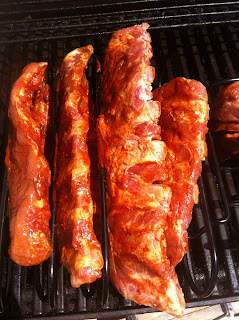 Years ago, before he was married, The Cheetahman and I went on a double date. My date was a Hungarian girl named Alex, who I'd met at my singles ward. Cheetahman's date was a girl named Wanda*, also from our singles ward, who was an avid beach volleyball player. Wanda** also liked ribs. She demonstrated this early in the evening at Tony Roma's by finishing an entire rack of baby backs less than five minutes after they hit our table.
I'm sure there are hordes of men who'd go weak at the knees when confronted by such an awesome display of rib-conquering appetite, but The Cheetahman wasn't one of them...especially when he was footing the bill. Truth is, his presence that evening was more an exercise in accommodation than romantic courtship.
At any rate, by the time the rest of us finished our meal and drove up to the University of Utah campus to shoot a few games of pool at the student union, an odd tone had been established.
Vulgar Display of Rib-Consuming Power + First Date Awkwardness = Odd Tone.
I think that's why about halfway through our second game of two-on-two, I got bored and started cheating. Whenever the girls weren't paying attention, I started pulling out the balls they'd already knocked in and placing them back on the table. Since Cheetahman and I were shooting like crap anyway, our new advantage didn't become immediately obvious. In fact, once he caught on to my plan, we both carried on the exercise for a full ten minutes before our dates realized what we were doing.
When they did finally catch us, something incredible happened. We laughed, our dates pretended to be offended, then they laughed too. The awkward date tension was broken. Everyone relaxed, and the rest of the evening was a lot of fun. On the way home, Wanda*** confessed her love to Cheetahman, and he rejected it and married Alex instead. (About six months later...not that same night).
Vulgar Display of Rib-Consuming Power + First Date Awkwardness + Cheating at Pool = Marriage.
As easy as it is to apply the value of a tension-breaker to dating, I'm going to suggest that the lesson applies elsewhere in life. And I'm not just thinking about board meetings or sports teams, either.
(prepare for profound philosophical/spiritual transition...)
One of the toughest challenges in life, particularly as a Mormon, is understanding the balance of responsibility between yourself and the Lord. We're all required to take initiative, whether it has to do with dating, career, buying leather pants, or most any major life decision, but all the initiative in the world still takes a backseat to the Lord's Timing. This frequently results in an uncomfortable tension and anxiety that leaves a person wondering whether their failure to find a job/spouse/etc. is the result of them doing something wrong, or merely The Lord's Will.
At times like those, I really appreciate those little icebreakers.
---
*Not her real name.
**Again, not her real name. But a name you could associate with a woman who was really into ribs.
***Jamie Lee Curtis once played a woman named Wanda.****
****Jamie Lee Curtis was not Cheetahman's date.
And yet, there are a few dating tips I feel assured of. One is that you should always cheat when you play pool.

I'm sure there are hordes of men who'd go weak at the knees when confronted by such an awesome display of rib-conquering appetite, but The Cheetahman wasn't one of them...especially when he was footing the bill. Truth is, his presence that evening was more an exercise in accommodation than romantic courtship.
At any rate, by the time the rest of us finished our meal and drove up to the University of Utah campus to shoot a few games of pool at the student union, an odd tone had been established.
Vulgar Display of Rib-Consuming Power + First Date Awkwardness = Odd Tone.
I think that's why about halfway through our second game of two-on-two, I got bored and started cheating. Whenever the girls weren't paying attention, I started pulling out the balls they'd already knocked in and placing them back on the table. Since Cheetahman and I were shooting like crap anyway, our new advantage didn't become immediately obvious. In fact, once he caught on to my plan, we both carried on the exercise for a full ten minutes before our dates realized what we were doing.
When they did finally catch us, something incredible happened. We laughed, our dates pretended to be offended, then they laughed too. The awkward date tension was broken. Everyone relaxed, and the rest of the evening was a lot of fun. On the way home, Wanda*** confessed her love to Cheetahman, and he rejected it and married Alex instead. (About six months later...not that same night).
Vulgar Display of Rib-Consuming Power + First Date Awkwardness + Cheating at Pool = Marriage.
As easy as it is to apply the value of a tension-breaker to dating, I'm going to suggest that the lesson applies elsewhere in life. And I'm not just thinking about board meetings or sports teams, either.
(prepare for profound philosophical/spiritual transition...)
One of the toughest challenges in life, particularly as a Mormon, is understanding the balance of responsibility between yourself and the Lord. We're all required to take initiative, whether it has to do with dating, career, buying leather pants, or most any major life decision, but all the initiative in the world still takes a backseat to the Lord's Timing. This frequently results in an uncomfortable tension and anxiety that leaves a person wondering whether their failure to find a job/spouse/etc. is the result of them doing something wrong, or merely The Lord's Will.
At times like those, I really appreciate those little icebreakers.
---
*Not her real name.
**Again, not her real name. But a name you could associate with a woman who was really into ribs.
***Jamie Lee Curtis once played a woman named Wanda.****
****Jamie Lee Curtis was not Cheetahman's date.
Sunday, June 02, 2013
Five Closed Restaurants...Five Gaping Holes in My Life
Last week I spent a few days in Seattle with The Cheetahman eating great food, taking some pictures, and catching up with a few old friends. Along the way one afternoon, while deliberating the location of our evening meal, a little burger joint back in Bountiful named Carmack's came up, because there's really no way to have a conversation about food without thinking of some of the great food that has been lost to history.
In an attempt to respect that history, I have produced the following list of favorite restaurants I have lost over the years. In an attempt to be constructive instead of merely complaining, I have also included suggestions for the restaurants that have filled these gaping culinary holes in my heart.
1. Bob's Deli, North Salt Lake
The first time I ever had beef jerky I was twenty minutes removed from a youth soccer game when I was six years old. My friend Steve and I were getting a ride home from his dad, and on the way we swung by Bob Kellersburger's warehouse so he could pick up some steaks. Steve's dad got us some jerky for our trouble. Years later I became such a fan that my mother sent me bi-monthly shipments of Bob's X-Spice jerky for the entirety of my LDS mission to Chicago. Then Bob retired, and Kellersburger's is now an Atlantis Burger.
The Replacement: I've never found a spot-on substitute for Bob's X-Spice, but a friend referred me to Thompsons' Smokehouse outside of Tooele for some good homemade jerky. It's definitely in the ballpark, and hey, any excuse to drive to Tooele, right?
2. Carmack's, Bountiful
Longtime Bountiful residents almost universally hold up Carmack's as the Greatest of the Local Burger Joints, and universally mourn the day the original spot went up in flames back in the 1990s. My only regret is that I didn't enjoy it more when it was around, as I spent most of my youth fixated on generic McDonald's hamburgers instead of appreciating the classic burgers that sprang from Carmack's ancient equipment. A few years after the original burned down, the owners attempted to open a new restaurant off of 5th South, but it wasn't the same, and died a pretty quick death.
The Replacement: Maddox Drive-In, Brigham City (Admittedly a stretch, since Maddox is no one's second banana).
3. R&B's, West Yellowstone, Montana
As a kid, R&B's was noted as the best burger joint in West Yellowstone (at least to my family), and was a traditional stop whenever we'd make our yearly pilgrimage to my grandparents' place in Island Park. Sometime in my teens the place went out of business, and now the building is entirely vacant.
The Replacement: Nothing. Absolutely nothing. There is not a single place I look forward to eating at when I go to Island Park in the summer. If anyone out there in the interwebs has any suggestions, I am EAGER to be proven wrong.
4. Eat-a-Burger, Bountiful/Salt Lake City
As a teenager, Eat-a-Burger had great hamburgers and even better spicy fries. Its locations were shaped like old '50s-style diners, complete with barstools and chrome-lined booths. Over the years they went out of business one at a time...first my go-to spot in Bountiful off 5th South, then eventually the last spot I knew of in Holladay off Highland Drive just a few years ago. I don't know how many times I ate at one of their locations, but the time I remember best was meeting up at the Bountiful spot with my friend Noel shortly after I thought I had been stood up for a date.*
The Replacement: I still miss Eat-a-Burger's hamburgers, and the old juke box that my buddy Brian and I used to play "House of the Rising Sun" on, but the cajun fries at Five Guys are a dead ringer for the spicy fries. And the burgers at Salt City Burger are fantastic. Still feels like swapping a dollar for four quarters, though.
5. Manuel's, Salt Lake City
The photo banner at the top of this blog includes an image of my dad holding a proud infant in a sombrero. That's me. We were at a small Mexican restaurant in Salt Lake called Manuel's that was one of my family's favorite lunch spots for years until it closed its doors well into my twenties. I won't kid around: it was about as authentic as a late '70s Bee Gees drumbeat, but I am as fond of Manuel's as I am of any of the ghosts on this list.
The Replacement: The Red Iguana, obviously.
---
*A story that may deserve its own post.
In an attempt to respect that history, I have produced the following list of favorite restaurants I have lost over the years. In an attempt to be constructive instead of merely complaining, I have also included suggestions for the restaurants that have filled these gaping culinary holes in my heart.
1. Bob's Deli, North Salt Lake
The first time I ever had beef jerky I was twenty minutes removed from a youth soccer game when I was six years old. My friend Steve and I were getting a ride home from his dad, and on the way we swung by Bob Kellersburger's warehouse so he could pick up some steaks. Steve's dad got us some jerky for our trouble. Years later I became such a fan that my mother sent me bi-monthly shipments of Bob's X-Spice jerky for the entirety of my LDS mission to Chicago. Then Bob retired, and Kellersburger's is now an Atlantis Burger.
The Replacement: I've never found a spot-on substitute for Bob's X-Spice, but a friend referred me to Thompsons' Smokehouse outside of Tooele for some good homemade jerky. It's definitely in the ballpark, and hey, any excuse to drive to Tooele, right?
2. Carmack's, Bountiful
Longtime Bountiful residents almost universally hold up Carmack's as the Greatest of the Local Burger Joints, and universally mourn the day the original spot went up in flames back in the 1990s. My only regret is that I didn't enjoy it more when it was around, as I spent most of my youth fixated on generic McDonald's hamburgers instead of appreciating the classic burgers that sprang from Carmack's ancient equipment. A few years after the original burned down, the owners attempted to open a new restaurant off of 5th South, but it wasn't the same, and died a pretty quick death.
The Replacement: Maddox Drive-In, Brigham City (Admittedly a stretch, since Maddox is no one's second banana).
3. R&B's, West Yellowstone, Montana
As a kid, R&B's was noted as the best burger joint in West Yellowstone (at least to my family), and was a traditional stop whenever we'd make our yearly pilgrimage to my grandparents' place in Island Park. Sometime in my teens the place went out of business, and now the building is entirely vacant.
The Replacement: Nothing. Absolutely nothing. There is not a single place I look forward to eating at when I go to Island Park in the summer. If anyone out there in the interwebs has any suggestions, I am EAGER to be proven wrong.
4. Eat-a-Burger, Bountiful/Salt Lake City
As a teenager, Eat-a-Burger had great hamburgers and even better spicy fries. Its locations were shaped like old '50s-style diners, complete with barstools and chrome-lined booths. Over the years they went out of business one at a time...first my go-to spot in Bountiful off 5th South, then eventually the last spot I knew of in Holladay off Highland Drive just a few years ago. I don't know how many times I ate at one of their locations, but the time I remember best was meeting up at the Bountiful spot with my friend Noel shortly after I thought I had been stood up for a date.*
The Replacement: I still miss Eat-a-Burger's hamburgers, and the old juke box that my buddy Brian and I used to play "House of the Rising Sun" on, but the cajun fries at Five Guys are a dead ringer for the spicy fries. And the burgers at Salt City Burger are fantastic. Still feels like swapping a dollar for four quarters, though.
5. Manuel's, Salt Lake City
The photo banner at the top of this blog includes an image of my dad holding a proud infant in a sombrero. That's me. We were at a small Mexican restaurant in Salt Lake called Manuel's that was one of my family's favorite lunch spots for years until it closed its doors well into my twenties. I won't kid around: it was about as authentic as a late '70s Bee Gees drumbeat, but I am as fond of Manuel's as I am of any of the ghosts on this list.
The Replacement: The Red Iguana, obviously.
---
*A story that may deserve its own post.
Subscribe to:
Posts (Atom)